Quotessence
Home / Quotes / Quote by Kim Stanley Robinson

Quote by Kim Stanley Robinson

“I consider my novels, amongst many other things, to be my political activism. I’m interested in portraying futures where there are more cooperative, altruistic, post-capitalist systems that are working well.”

Quote by Kim Stanley Robinson

Author
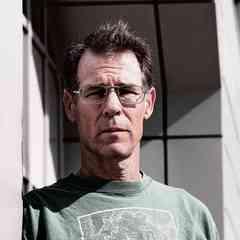
Kim Stanley Robinson

Kim Stanley Robinson is an American science fiction writer known for his profound insights into the environment, society, and the future world. His works often explore the interactions between science, technology, and social change, as well as their impact on humanity and the Earth. more

You May Also Like

“The question of whether we wanted all this waste and pollution was never put up for a vote. No one has ever run for office on a platform of disposable clothing. Make no mistake: our votes matter. But changing the way things are won’t happen through our votes alone. How we spend our money matters, too.”

“You may well ask: "Why direct action? Why sit-ins, marches and so forth? Isn't negotiation a better path?" You are quite right in calling for negotiation. Indeed, this is the very purpose of direct action. Nonviolent direct action seeks to create such a crisis and foster such a tension that a community which has constantly refused to negotiate is forced to confront the issue. It seeks so to dramatize the issue that it can no longer be ignored.”

“The Negro has many pent-up resentments and latent frustrations, and he must release them. So let him march; let him make prayer pilgrimages to the city hall; let him go on freedom rides—and try to understand why he must do so. If his repressed emotions are not released in nonviolent ways, they will seek expression through violence; this is not a threat but a fact of history. So I have not said to my people: "Get rid of your discontent." Rather, I have tried to say that this normal and healthy discontent can be channeled into the creative outlet of nonviolent direct action. And now this approach is being termed extremist.”

“I had hoped that the white moderate would see this need. Perhaps I was too optimistic; perhaps I expected too much. I suppose I should have realized that few members of the oppressor race can understand the deep groans and passionate yearnings of the oppressed race, and still fewer have the vision to see that injustice must be rooted out by strong, persistent and determined action.”

“Before closing I feel impelled to mention one other point in your statement that has troubled me profoundly. You warmly commended the Birmingham police force for keeping "order" and "preventing violence." I doubt that you would have so warmly commended the police force if you had seen its dogs sinking their teeth into unarmed, nonviolent Negroes. I doubt that you would so quickly commend the policemen if you were to observe their ugly and inhumane treatment of Negroes here in the city jail; if you were to watch them push and curse old Negro women and young Negro girls; if you were to see them slap and kick old Negro men and young boys; if you were to observe them, as they did on two occasions, refuse to give us food because we wanted to sing our grace together. I cannot join you in your praise of the Birmingham police department.”

“The significant conclusion emerges that those whites without a vested interest in segregation have found acceptable exactly the changes that the nonviolent demonstrations present as their central demands. Those objectives Negroes have dramatized, fought for and defined have clearly become fair and reasonable demands to the white population, both North and South. The summer of our discontent, far from alienating America' white citizens, brought them closer into harmony with its Negro citizens than ever before.”

“If anyone had questioned how deeply the summer's activities had penetrated the consciousness of white America, the answer was evident in the treatment accorded the March on Washington by all the media of communication. Normally Negro activities are the object of attention in the press only when they are likely to lead to some dramatic outbreak, or possess some bizarre quality. The March was the first organized Negro operation which was accorded respect and coverage commensurate with its importance. The millions who viewed it on television were seeing an event historic not only because of the subject, but because it was being brought into their homes. Millions of white Americans, for the first time, had a clear, long look at Negroes engaged in a serious occupation. For the first time millions listened to the informed and thoughtful words of Negro spokesmen, from all walks of life. The stereotype of the Negro suffered a heavy blow. This was evident in some of the comment, which reflected surprise at the dignity, the organization and even the wearing apparel and friendly spirit of the participants. If the press had expected something akin to a minstrel show, or a brawl, or a comic display of odd clothes and bad manners, they were disappointed. A great deal has been said about a dialogue between Negro and white. Genuinely to achieve it requires that all the media of communication open their channels wide as they did on that radiant August day. As television beamed the image of this extraordinary gathering across the border oceans, everyone who believed in man's capacity to better himself had a moment of inspiration and confidence in the future of the human race. And every dedicated American could be proud that a dynamic experience of democracy in his nation's capital had been made visible to the world.”

“Recently, Roy Wilkins and I appeared on the television program "Meet the Press." There were the usual questions about how much more the Negro wants, but there seemed to be a new undercurrent of implications related to the sturdy new strength of our movement. Without the courtly complexities, we were, in effect, being asked if we could be trusted to hold back the surging tides of discontent so that those on the shore would not be made too uncomfortable by the buffeting and onrushing waves. Some of the questions implied that our leadership would be judged in accordance with our capacity to "keep the Negro from going too far." The quotes are mine, but I think the phrase mirrors the thinking of the panelists as well as of many other white Americans.”