“Can a free government possibly exist with the Roman Catholic religion?”
Quote by John Adams
Work
The Works of John Adams, Second President of the United States: With a Life of the Author, Notes and Illustrations
This volume includes a wide array of John Adams's personal and professional correspondence, political writings, and other documents. It also features a detailed biography of Adams, providing insight into his life and times. The book is further enhanced with notes and illustrations that offer context and analysis of Adams's work. more
Author
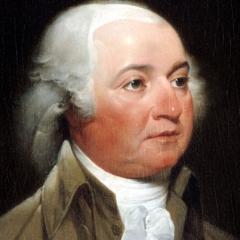
John Adams
John Adams, the second President of the United States, was a statesman, diplomat, and writer. Born on October 30, 1735, and died on July 4, 1826, Adams played a significant role in the American Revolutionary War. He was one of the drafters of the Declaration of Independence and served as the President from 1789 to 1797. more
You May Also Like
Source: The Works of John Adams, Second President of the United States: With a Life of the Author, Notes and Illustrations
“Politics are the divine science, after all.”
Source: Works: with a life of the author
Source: Legal Papers of John Adams
Source: The Works of John Adams, Second President of the United States: With a Life of the Author, Notes and Illustrations
Source: Old Family Letters: Copied from the Originals for Alexander Biddle... Series A-[B]
“What is valuable is not new, and what is new is not valuable.”
Source: The works
Source: Defender of the Union: the oratory of Daniel Webster
“Instruct the mothers of the French people.”
Source: The Great Speeches and Orations of Daniel Webster
Source: The Great Orations and Senatorial Speech of Daniel Webster