Quotessence
Home / Quotes / Quote by Lord Chesterfield

Quote by Lord Chesterfield

“Vanity, or to call it by a gentler name, the desire of admiration and applause, is, perhaps, the most universal principle of humanactions.... Where that desire is wanting, we are apt to be indifferent, listless, indolent, and inert.... I will own to you, under the secrecy of confession, that my vanity has very often made me take great pains to make many a woman in love with me, if I could, for whose person I would not have given a pinch of snuff.”

Quote by Lord Chesterfield

Author
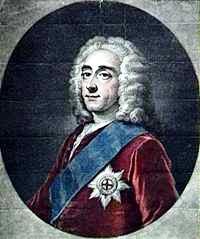
Lord Chesterfield
Lord Chesterfield

British statesman known for his epistolary works, which had a profound impact on 18th-century British society. more

You May Also Like

“Never yield to that temptation, which, to most young men, is very strong, of exposing other people's weaknesses and infirmities, for the sake either of diverting the company, or of showing your own superiority. You may get the laugh on your side by it for the present; but you will make enemies by it for ever; and even those who laugh with you then, will, upon reflection, fear, and consequently hate you.”

“I often wish for the end of the wretched remnant of my life; and that wish is a rational one; but then the innate principle of self-preservation, wisely implanted in our natures, for obvious purposes, opposes that wish, and makes us endeavour to spin out our thread as long as we can, however decayed and rotten it may be.”

“A foreign minister, I will maintain it, can never be a good man of business if he is not an agreeable man of pleasure too. Half his business is done by the help of his pleasures: his views are carried on, and perhaps best, and most unsuspectedly, at balls, suppers, assemblies, and parties of pleasure; by intrigues with women, and connections insensibly formed with men, at those unguarded hours of amusement.”

“A learned parson, rusting in his cell at Oxford or Cambridge, will reason admirably well upon the nature of man; will profoundly analyze the head, the heart, the reason, the will, the passions, the senses, the sentiments, and all those subdivisions of we know not what ; and yet, unfortunately, he knows nothing of man... He views man as he does colours in Sir Isaac Newton's prism, where only the capital ones are seen; but an experienced dyer knows all their various shades and gradations, together with the result of their several mixtures.”