Quotessence
Home / Quotes / Quote by E. B. White

Quote by E. B. White

“In order to read one must sit down, usually indoors. I am restless and would rather sail a boat than crack a book. I've never had a very lively literary curiosity, and it has sometimes seemed to me that I am not really a literary fellow at all. Except that I write for a living.”

Quote by E. B. White

Author
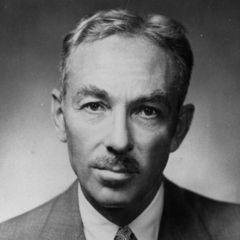
E. B. White
E. B. White

E. B. White, a renowned American writer, was born on July 11, 1899, and passed away on October 1, 1985. Known for his concise and elegant writing style, he is the author of classic works such as 'Charlotte's Web' and 'Stuart Little'. more

You May Also Like

“The beginner should approach style warily, realizing that it is himself he is approaching, no other; and he should begin by turning resolutely away from all devices that are popularly believed to indicate style - all mannerisms, tricks, adornments. The approach to style is by way of plainness, simplicity, orderliness, sincerity.”

“The essayist is a self-liberated man, sustained by the childish belief that everything he thinks about, everything that happens to him, is of general interest. He is a fellow who thoroughly enjoys his work, just as people who enjoy bird walks enjoys theirs. Each new excursion of the essayist, each new 'attempt,' differs from the last and takes him into new country. This delights him. Only a person who is congenitally self-centered has the effrontery and the stamina to write essays.”

“The Supreme Court said nothing about silliness, but I suspect it may play more of a role than one might suppose. People are, if anything, more touchy about being thought silly than they are about being thought unjust... Probably the first slave ship, with Negroes lying in chains on its decks, seemed commonsensical to the owners who operated it and to the planters who patronized it. But such a vessel would not be in the realm of common sense today. The only sense that is common, in the long run, is the sense of change.”

“When we think of [John F. Kennedy], he is without a hat, standing in the wind and weather. He was impatient of topcoats and hats, preferring to be exposed, and he was young enough and tough enough to enjoy the cold and the wind of those times.... It can be said of him, as of few men in a like position, that he did not fear the weather, and did not trim his sails, but instead challenged the wind itself, to improve its direction and to cause it to blow more softly and more kindly over the world and its people.”