Quotessence
Home / Quotes / Quote by Charles Darwin

Quote by Charles Darwin

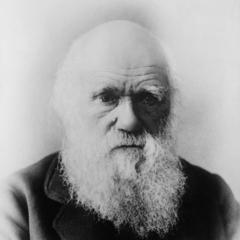
“I can indeed hardly see how anyone ought to wish Christianity to be true for if so the plain language of the text seems to show that the men who do not believe, and this would include my father, brother and almost all of my friends, will be everlastingly punished. And this is a damnable doctrine.”

Quote by Charles Darwin

Work

Autobiographies

This book is a compilation of first-hand accounts and reflections on the lives and experiences of different individuals, offering readers a glimpse into the personal histories and insights of the authors. more

Author

Charles Darwin
Charles Darwin

Charles Darwin, a British naturalist, is renowned as the founder of evolutionary biology. Born on February 12, 1809, in England, he passed away on April 19, 1882. Darwin is best known for his research on the theory of evolution, which proposed that species evolve through natural selection and survival of the fittest. more

You May Also Like

“Those afraid of the universe as it really is, those who pretend to nonexistent knowledge and envision a Cosmos centered on human beings will prefer the fleeting comforts of superstition. They avoid rather than confront the world. But those with the courage to explore the weave and structure of the Cosmos, even where it differs profoundly from their wishes and prejudices, will penetrate its deepest mysteries.”

“Present global culture is a kind of arrogant newcomer. It arrives on the planetary stage following four and a half billion years of other acts, and after looking about for a few thousand years declares itself in possession of eternal truths. But in a world that is changing as fast as ours, this is a prescription for disaster. No nation, no religion, no economic system, no body of knowledge, is likely to have all the answers for our survival. There must be many social systems that would work far better than any now in existence. In the scientific tradition, our task is to find them.”

“When anyone tells me that he saw a dead man restored to life, I immediately consider with myself whether it be more probable that this person should either deceive or be deceived or that the fact which he relates should really have happened. I weigh the one miracle against the other and according to the superiority which I discover, I pronounce my decision. Always I reject the greater miracle. If the falsehood of his testimony would be more miraculous than the event which he relates, then and not till then, can he pretend to command my belief or opinion.”