“If it be the characteristic of a worldly man that he desecrates what is holy, it should be of the Christian to consecrate what is secular, and to recognize a present and presiding divinity in all things.”
Quote by Thomas Chalmers
Author
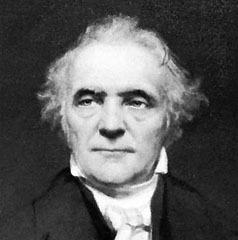
Thomas Chalmers
Thomas Chalmers (March 17, 1780 – May 31, 1847) was a prominent Scottish theologian, minister, and social reformer. Born in Anstruther, Fife, he studied at the University of St Andrews and became a key leader in the Church of Scotland. Known for his parish work in Glasgow, he focused on improving the lives of the urban poor and led the Disruption of 1843, which established the Free Church of Scotland. He advocated for education, moral reform, and church independence, leaving a lasting impact on Scottish society and religion. more
You May Also Like
“By the very constitution of our nature moral evil is its own curse.”
Source: Discourses on the Christian revelation, viewed in connection with the modern astronomy: To which are added, Discourses illustrative of the connection between theology & general science
Source: On the Adaptation of External Nature to the Moral and Intellectual Constitution of Man
Source: Works
“Guard against that vanity which courts a compliment, or is fed by it.”
Source: Memoirs of the Life and Writings of Thomas Chalmers, D.D. LL.D.
“Time deals gently with me; and though I feel that I descend, the slope is easy.”
Source: The Works of Anna Laetitia Barbauld: In Two Volumes
Source: The Works of Anna Laetitia Barbauld: In Two Volumes
Source: Anna Letitia Barbauld: Selected Poetry and Prose
“we should contract our ideas of education, and expect no more from it than it is able to perform.”
Source: Anna Letitia Barbauld: Selected Poetry and Prose