Quotessence
Home / Quotes / Quote by Maurice Maeterlinck

Quote by Maurice Maeterlinck

“Every new star that is found in the sky will lend of its rays to the passions, and thoughts, and the courage, of man. Whatever of beauty we see in all that surrounds us, within us already is beautiful; whatever we find in ourselves that is great and adorable, that do we find too in others.”

Quote by Maurice Maeterlinck

Work

Wisdom and Destiny

This book delves into the philosophical and existential aspects of wisdom and its role in shaping one's destiny. It examines how individuals navigate life's challenges and opportunities through the lens of wisdom, considering both internal and external factors. more

Author

Maurice Maeterlinck
Maurice Maeterlinck

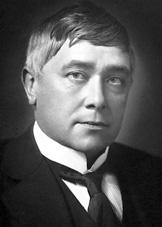
Maurice Maeterlinck, born on August 29, 1862, and died on May 6, 1949, was a renowned Belgian playwright, poet, and essayist. He is best known for his symbolism and symbolic drama, which deeply explored themes such as life, death, religion, and the universe. Maeterlinck's works have had a profound impact on 20th-century literature. more

You May Also Like

“There’s the claim that the only progress made is in posing problems that scientists can answer. That philosophy never has the means to answer problems—it’s just biding its time till the scientists arrive on the scene. You hear this quite often. There is, among some scientists, a real anti-philosophical bias. The sense that philosophy will eventually disappear. But there’s a lot of philosophical progress, it’s just a progress that’s very hard to see. It’s very hard to see because we see with it. We incorporate philosophical progress into our own way of viewing the world. [...] And it’s usually philosophical arguments that first introduce the very outlandish idea that we need to extend rights. And it takes more, it takes a movement, and activism, and emotions, to affect real social change. It starts with an argument, but then it becomes obvious. The tracks of philosophy’s work are erased because it becomes intuitively obvious. The arguments against slavery, against cruel and unusual punishment, against unjust wars, against treating children cruelly—these all took arguments. About 30 years ago, the philosopher Peter Singer started to argue about the way animals are treated in our factory farms. Everybody thought he was nuts. But I’ve watched this movement grow; I’ve watched it become emotional. It has to become emotional. You have to draw empathy into it. But here it is, right in our time—a philosopher making the argument, everyone dismissing it, but then people start discussing it.”

“I find it interesting that by saying to someone “you just realized that you’re breathing”, you immediately cause them to go from breathing automatically and subconsciously to having to control their breathing manually and consciously. This is the power of words. It is a real, physical power— somehow, when we flop our tongues around in specific ways, audio waves are created that, when interpreted by the ears of another person, cause a real, physical change in that person such as I described above.”