Quotessence
Home / Quotes / Quote by Kazuo Ishiguro

Quote by Kazuo Ishiguro

“You will agree that such is often the way with matters one has given abiding thought to over a period of time; one is not struck by the truth until prompted quite accidentally by some external event.”

Quote by Kazuo Ishiguro

Work

The Remains of the Day

This novel, set in the 1950s, follows the life of Stevens, a dedicated butler who serves the same family for decades. It delves into the complexities of his personal and professional life, reflecting on the impact of the war and the changing social landscape of England. The narrative is introspective, offering a nuanced look at the role of servants in British society and the hidden emotional landscapes of its characters. more

Author
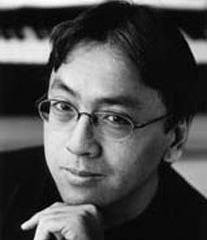
Kazuo Ishiguro
Kazuo Ishiguro

Kazuo Ishiguro is a Japanese-born British novelist known for his unique literary style and profound insights into human nature. His works often explore themes of memory, identity, and common human emotions. Born on November 8, 1954, Ishiguro's career began with the publication of his first novel 'When Breath Becomes Air' in 1982, which received widespread acclaim. more

You May Also Like

“There’s the claim that the only progress made is in posing problems that scientists can answer. That philosophy never has the means to answer problems—it’s just biding its time till the scientists arrive on the scene. You hear this quite often. There is, among some scientists, a real anti-philosophical bias. The sense that philosophy will eventually disappear. But there’s a lot of philosophical progress, it’s just a progress that’s very hard to see. It’s very hard to see because we see with it. We incorporate philosophical progress into our own way of viewing the world. [...] And it’s usually philosophical arguments that first introduce the very outlandish idea that we need to extend rights. And it takes more, it takes a movement, and activism, and emotions, to affect real social change. It starts with an argument, but then it becomes obvious. The tracks of philosophy’s work are erased because it becomes intuitively obvious. The arguments against slavery, against cruel and unusual punishment, against unjust wars, against treating children cruelly—these all took arguments. About 30 years ago, the philosopher Peter Singer started to argue about the way animals are treated in our factory farms. Everybody thought he was nuts. But I’ve watched this movement grow; I’ve watched it become emotional. It has to become emotional. You have to draw empathy into it. But here it is, right in our time—a philosopher making the argument, everyone dismissing it, but then people start discussing it.”

“I find it interesting that by saying to someone “you just realized that you’re breathing”, you immediately cause them to go from breathing automatically and subconsciously to having to control their breathing manually and consciously. This is the power of words. It is a real, physical power— somehow, when we flop our tongues around in specific ways, audio waves are created that, when interpreted by the ears of another person, cause a real, physical change in that person such as I described above.”

“[When asked if he had ever learned anything about his work from film criticism] No. To see a film once and write a review is an absurdity. Yet very few critics ever see a film twice or write about films from a leisurely, thoughtful perspective. The reviews that distinguish most critics, unfortunately, are those slambang pans which are easy to write and fun to write and absolutely useless. There's not much in a critic showing off how clever he is at writing silly, supercilious gags about something he hates.”