Quotessence
Home / Quotes / Quote by Stephen Potter

Quote by Stephen Potter

Author

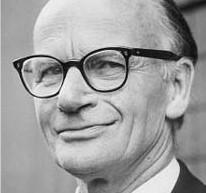
Stephen Potter
Stephen Potter

Stephen Potter (February 1, 1900 – December 2, 1969) was a British author, playwright, and humorist, best known for his 'Gamesmanship' series. He studied English at University College London and later worked as a literary editor and BBC scriptwriter. Potter's most famous work, 'The Theory and Practice of Gamesmanship' (1947), humorously explores psychological tactics in social and competitive situations. His writings influenced later humorists and popular culture, earning him a reputation as a master of British wit. Potter's legacy endures through his unique blend of satire and social observation. more

You May Also Like

“In our small chess community in Marylebone it would be mock modesty on my part to deny that I have built up for myself a considerable name without ever actually having won a single game. Even the best players are sometimes beaten, and that is precisely what happens to me.”

“Most liberal-minded folk would like to think that since they are not hostile to people of a different race, racism is a disease of the uneducated, unenlightened and socially backward - football hooligans, British National Party supporters, policemen. You could call this the Bad Guy Theory. But the Bad Guy Theory does not explain why Indian-heritage children do nearly twice as well as Pakistani-heritage children at GCSE.”

“Our anti-crisis policy is aimed at supporting domestic demand, providing social guarantees for the population, and creating new jobs. Like many countries, we have reduced production taxes, leaving money in the economy. We have optimised state spending.”

“We must seek support in the moral values that have ensured the progress of our civilization. Honesty and hard work, responsibility and faith in our strength are bound to bring us success. There should be no place for despondency. The crisis can and must be fought by uniting our intellectual, spiritual and material resources.”

“I believe that the 21st century economy is an economy of people, not of factories. The intellectual factor has become increasingly important in the economy, which is why we are planning to focus on providing additional opportunities for people to realise their potential.”

“Frankly speaking, we all know that provoking military and political instability, regional, and other conflicts is a helpful means of distracting the public from growing domestic social and economic problems in certain countries. Such attempts cannot be ruled out, unfortunately.”