“The military mind is indeed a menace. Old-fashioned futurity that sees only men fighting and dying in smoke and fire; hears nothing more civilized than a cannonade; scents nothing but the stink of battle-wounds and blood.”
Quote by Sean O'Casey
Work
Sunset and evening star
This book takes its title from the evocative imagery of a sunset and the first appearance of the evening star, often associated with transition, closure, and contemplation. The narrative or thematic content likely centers on moments of change, the passage of time, and the serene yet poignant atmosphere of dusk. It may draw on natural symbolism to examine human experiences of farewell, memory, or the calm that follows a day's end, offering a meditative perspective on life's concluding chapters. more
Author
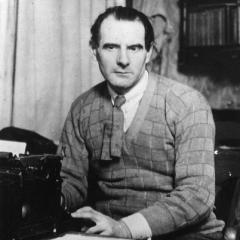
Sean O'Casey
Sean O'Casey (March 30, 1880 – September 18, 1964) was a renowned Irish dramatist known for his realistic portrayals of Dublin's working-class life and social conflicts. Born into a poor Protestant family, he experienced hardship early and engaged in labor and trade union activism. His major works include Juno and the Paycock, The Plough and the Stars, and The Silver Tassie. O'Casey's plays blend tragedy and comedy, reflecting the struggles of Irish independence and human nature. He later moved to England and continued writing until his death, leaving a lasting impact on 20th-century theater. more
You May Also Like
“'Tis the soldier's life to have their balmy slumbers waked with strife.”
Source: Othello: Revised Edition
Source: Selected essays of Montaigne: in the translation of John Florio
“Admiral. That part of a warship which does the talking while the figurehead does the thinking.”
Source: Ambrose Bierce: The Devil's Dictionary, Tales, and Memoirs: The Devil's Dictionary, Tales, and Memoirs
“The most advanced nations are always those who navigate the most.”
Source: Society and Solitude: Twelve Chapters
Source: Reflections on the Revolution in France and on the Proceedings in Certain Societies in London Relative to that Event: 1790
“The only traditions of the Royal Navy are rum, sodomy and the lash.”