“There are hundreds of thousands of microbes surrounding us, but they cannot harm us unless we become weak, until the body is ready and predisposed to receive them. There may be a million microbes of misery floating about us. Never mind! They dare not approach us, they have no power to get a hold on us, until the mind is weakened. This is the great fact: strength is life. Weakness is death. Strength is felicity, life eternal, immortal. Weakness is constant strain and misery: weakness is death”
Quote by Swami Vivekananda
Work
The Complete Works of the Swami Vivekananda, Comprising All His Lectures, Addresses and Discourses Delivered in Europe, America and India: All His Writings in Prose and Poetry, Together with Translations of Those Written in Bengali and Sanskrit; Reports of His Interviews and His Replies to the Various Addresses of Welcome; His Sayings and Epistles,--private and Public--original and Translated; with an Index; Carefully Revised & Edited
The Complete Works of the Swami Vivekananda is a comprehensive compilation of the teachings and writings of the influential spiritual leader. It encompasses his lectures, addresses, and discourses delivered across Europe, America, and India. The book also includes his prose and poetry, with translations from Bengali and Sanskrit. Additionally, it features reports of interviews, his replies to various welcome addresses, and a collection of his sayings and epistles, both private and public. The work is presented in a carefully revised and edited format, complete with an index for ease of use. more
Author
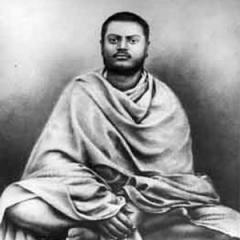
Swami Vivekananda
Swami Vivekananda (January 12, 1863 – July 4, 1902) was an Indian Hindu monk, philosopher, and social reformer. Born as Narendranath Datta in Kolkata, he was a chief disciple of the mystic Ramakrishna. He is best known for his historic speech at the 1893 Parliament of the World's Religions in Chicago, where he introduced Hinduism to the Western world. He founded the Ramakrishna Mission in 1897, focusing on social service, education, and interfaith harmony. His teachings emphasized self-realization, service to humanity, and the unity of all religions. He wrote extensively on yoga and Vedanta philosophy, influencing global spirituality and Indian nationalism. He died at the age of 39, leaving a lasting legacy as a bridge between Eastern and Western thought. more
You May Also Like
“There cannot be friendship without equality.”
Source: Swami Vivekananda's Rousing Call to Hindu Nation
Source: The Complete Works of Swami Vivekananda
Source: Jnana Yoga: The Yoga of Knowledge
Source: The Complete Works of Swami Vivekananda
“This earth is higher than all the heavens; this is the greatest school in the universe.”
Source: Living at the Source: Yoga Teachings of Vivekananda