Quotessence
Home / Quotes / Quote by Ralph Waldo Emerson

Quote by Ralph Waldo Emerson

“Nature never rhymes her children, nor makes two men alike. When we see a great man, we fancy a resemblance to some historical person, and predict the sequel of his character and fortune, a result which he is sure to disappoint. None will ever solve the problem of his character according to our prejudice, but only in his high unprecedented way.”

Quote by Ralph Waldo Emerson

Work

Essays and Lectures

This book is a compilation of written works and spoken presentations that delve into a wide range of subjects, offering insights and perspectives on different themes and concepts. more

Author

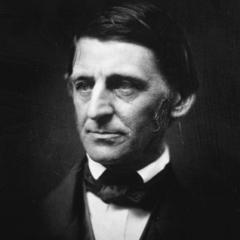
Ralph Waldo Emerson
Ralph Waldo Emerson

American essayist, poet, and philosopher. Born on May 25, 1803, and died on April 27, 1882. Known for his transcendentalist philosophy, his works have had a profound impact on literature and the intellectual world. more

You May Also Like

“For all our penny-wisdom, for all our soul-destroying slavery to habit, it is not to be doubted that all men have sublime thoughts; that all men value the few real hours of life; they love to be heard; they love to be caught up into the vision of principles. We mark with light in the memory the few interviews we have had, in the dreary years of routine and of sin, with souls that made our souls wiser; that spoke what we thought; that told us what we knew; that gave us leave to be what we only were.”

“In our Mechanics' Fair, there must be not only bridges, ploughs, carpenter's planes, and baking troughs, but also some few finer instruments,--rain-gauges, thermometers, and telescopes; and in society, besides farmers, sailors, and weavers, there must be a few persons of purer fire kept specially as gauges and meters of character; persons of a fine, detecting instinct, who note the smallest accumulations of wit and feeling in the bystander.”

“We sometimes observe that spoiled children contract a habit of annoying quite wantonly those who have charge of them, and seem tomeasure their own sense of well-being, not by what they do, but by the degree of reaction they can cause. It is vain to get rid of them by not minding them: if purring and humming is not noticed, they squeal and screech; then if you chide and console them, they find the experiment succeeds, and they begin again. The child will sit in your arms contented if you do nothing. If you take a book and read, he commences hostile operations.”