“Taint no law on earth dat kin make a man be decent if it aint in 'im.”
Quote by Zora Neale Hurston
Work
I Love Myself when I Am Laughing ... and Then Again when I Am Looking Mean and Impressive: A Zora Neale Hurston Reader
The book is a compilation of works that showcase Hurston's wit, humor, and social commentary. It includes her famous essays, such as 'How It Feels to Be Colored Me,' and short stories that reflect the African American experience in the early 20th century. The reader is treated to a diverse array of voices and narratives, highlighting Hurston's contribution to American literature. more
Author
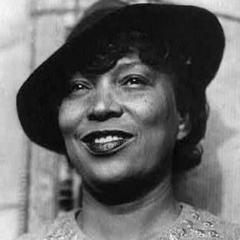
Zora Neale Hurston
Zora Neale Hurston (1891-1960) was an American anthropologist, folklorist, and novelist who played a pivotal role in the Harlem Renaissance. Born in Alabama and raised in Eatonville, Florida, she became the first African American student at Barnard College, Columbia University, studying under Franz Boas. Hurston is best known for her novel "Their Eyes Were Watching God," now considered a classic of American literature. She conducted extensive anthropological fieldwork in the American South and Caribbean, preserving African American folk traditions. Though largely forgotten after her death, her work was revived by Alice Walker in the 1970s, establishing her as a foundational figure in African American literature and anthropology. more
You May Also Like
“Work is the nearest thing to happiness that I can find.”
Source: Dust tracks on a road
Source: Spunk: Three Tales
Source: On call: political essays
“A democratic state is not proven by the welfare of the strong but by the welfare of the weak.”
Source: Some of Us Did Not Die: New and Selected Essays