Quotessence
Home / Quotes / Quote by Antoine de Saint-Exupery

Quote by Antoine de Saint-Exupery

“And the fox said to the little prince: men have forgotten this truth, but you must not forget it. You become responsible, forever, for what you have tamed.”

Quote by Antoine de Saint-Exupery

Author
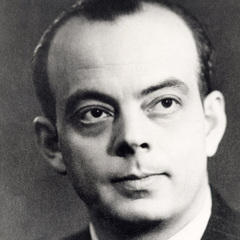
Antoine de Saint-Exupery

Antoine de Saint-Exupery was a French writer, poet, and aviator, renowned for his novella 'The Little Prince,' which has been translated into over 300 languages and remains one of the most beloved books worldwide. During World War II, he served as a pilot in the French Air Force, and his mysterious disappearance over the Mediterranean Sea in 1944 remains unsolved. more

You May Also Like

“[...]One positions an Axis of Evil where there is none. Good is directive, directional; it has a finality in principle and therefore constitutes an axis. Evil is more of a parallax. It is never directional, and is not even opposed to Good. There is always some kind of diversion, a deviation, a curve. As Good goes straight ahead, Evil deviates. It is a deviance, a perversion. You never know where Evil is going, or how. It cannot be mastered. In almost topological terms, it is merely a deviation. Only Good could lay claim to being an axis. But this axis is projected on Evil; an imaginary Axis of Evil is created to justify the Axis of Good. This is a strategic mistake. When you try to target Evil in its unfindable axis, when you fight it militarily, with a frontal attack, you can only miss it.”

“There is no man,’ he began, ‘however wise, who has not at some period of his youth said things, or lived in a way the consciousness of which is so unpleasant to him in later life that he would gladly, if he could, expunge it from his memory. And yet he ought not entirely to regret it, because he cannot be certain that he has indeed become a wise man—so far as it is possible for any of us to be wise—unless he has passed through all the fatuous or unwholesome incarnations by which that ultimate stage must be preceded. I know that there are young fellows, the sons and grand sons of famous men, whose masters have instilled into them nobility of mind and moral refinement in their schooldays. They have, perhaps, when they look back upon their past lives, nothing to retract; they can, if they choose, publish a signed account of everything they have ever said or done; but they are poor creatures, feeble descendants of doctrinaires, and their wisdom is negative and sterile. We are not provided with wisdom, we must discover it for ourselves, after a journey through the wilderness which no one else can take for us, an effort which no one can spare us, for our wisdom is the point of view from which we come at last to regard the world. The lives that you admire, the attitudes that seem noble to you are not the result of training at home, by a father, or by masters at school, they have sprung from beginnings of a very different order, by reaction from the influence of everything evil or commonplace that prevailed round about them. They represent a struggle and a victory. I can see that the picture of what we once were, in early youth, may not be recognisable and cannot, certainly, be pleasing to contemplate in later life. But we must not deny the truth of it, for it is evidence that we have really lived, that it is in accordance with the laws of life and of the mind that we have, from the common elements of life, of the life of studios, of artistic groups—assuming that one is a painter—extracted something that goes beyond them.”

“You know this already. You'll have bodies stashed in tunnels of your own. Things you've done, mistakes you've made, secrets you hold—the guilt you carry for moments that stick out in your past like black stars in the firmament of your inner life. The outlier occurrences. The anomalies. The events you look back upon in disbelief, wondering how the hell they could have come to pass, and if they can be made to fit in a story you are prepared to own.”