Quotessence
Home / Quotes / Quote by Vito Acconci

Quote by Vito Acconci

“Architecture is inherently a totalitarian activity. One thing we hate about it is that when you design a space, you're probably designing people's behavior in that space. I don't know if we know how to change that, but our goal is to make spaces for people rather than people being subservient to spaces.”

Quote by Vito Acconci

Author
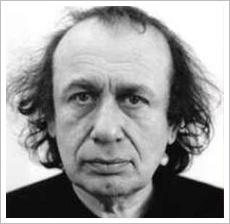
Vito Acconci
Vito Acconci

Vito Acconci (January 24, 1940 – April 28, 2017) was an American designer, performance artist, and architect. He first gained fame for his provocative performance and conceptual art, later transitioning to architecture and design, founding Acconci Studio. His work blurs the lines between art and architecture, emphasizing the interaction between space and the body. Key works include 'Seedbed' and 'Following Piece.' Acconci is considered a pioneer in public art and experimental architecture, influencing generations of artists and designers. more

You May Also Like

“When a building is so complete within itself, I always think, "Why do I even have to go inside it?" I would love to do architecture that people can have a free hand in the making of it. We've done spaces where things are hinged and they can go out or in, but that's not freedom. That's supermarket freedom, or the notion that you can have anything you want as long as the supermarket carries it. We would love to do a space where you go inside and there's nothing there. You might have a seat and when you don't need it anymore you get up and it disappears.”

“I like intersections. They're the nature of New York, and there's always the possibility that when you're at one you can meet someone new. Have I ever met anyone new at an intersection? No, but I like the idea of it. I like cities because if you're stopping on the corner to wait for a light to change, there's the possibility that you and somebody else can talk. And if you and that somebody else start to talk, then you can start to argue, and if you start to argue, you might start a revolution.”

“It was an incredible way to grow up, because words that you're taught - these definite things - you realize they sort of beautifully fall apart; that words are tenuous. In the middle of a large word, there's a small word that possibly contradicts the larger word. So I grew up where, on the one hand, the only thing I would ever think of doing was something in writing, music, or art, and on the other hand, I could've reacted strongly against it because it would've been a way to rebel.”

“I always thought, I can't waste time, I have to do work. I also thought that I was slower than other people, that I had to concentrate more. I always thought, I'm not brilliant, I have to work. That was something I embedded in myself very early: I have to go home and write. But did I get any more work done than people like Frank O'Hara, who were always going to parties? Probably not.”