“Frege has the merit of ... finding a third assertion by recognising the world of logic which is neither mental nor physical.”
Quote by Bertrand Russell
Work
Our Knowledge of the External World
This book delves into the fundamental questions of epistemology, examining how humans perceive and understand the external world. It investigates the reliability of human senses and the possibility of objective knowledge, offering a comprehensive analysis of the philosophical underpinnings of our understanding of reality. more
Author
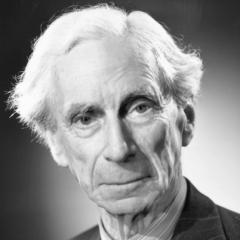
Bertrand Russell
Bertrand Russell was a British philosopher, mathematician, and logician born on May 18, 1872, and died on February 2, 1970. He is known for his contributions to logic and mathematics, particularly in the fields of mathematical logic and philosophical analysis. His works spanned a wide range of subjects, including ethics, political philosophy, history, and literary criticism. more
You May Also Like
Source: Syllabus of a Proposed System of Logic
Source: The Nicomachean ethics
Source: A System of Logic, Ratiocinative and Inductive: Being a Connected View of the Principles of Evidence, and the Methods of Scientific Investigation
Source: Translations from the Philosophical Writings of Gottlob Frege
“Logic is a wonderful thing but doesn't always beat actual thought.”
Source: The Last Continent: A Discworld Novel
Source: Bacon's Advancement of Learning and the New Atlantis
Source: The Modern Temper