Quotessence
Home / Quotes / Quote by Emily Bronte

Quote by Emily Bronte

“He leant his two elbows on his knees, and his chin on his hands and remained rapt in dumb meditation. On my inquiring the subject of his thoughts, he answered gravely 'I'm trying to settle how I shall pay Hindley back. I don't care how long I wait, if I can only do it at last. I hope he will not die before I do!' 'For shame, Heathcliff!' said I. 'It is for God to punish wicked people; we should learn to forgive.' 'No, God won’t have the satisfaction that I shall,' he returned. 'I only wish I knew the best way! Let me alone, and I'll plan it out: while I'm thinking of that I don't feel pain.”

Quote by Emily Bronte

Work

Wuthering Heights

Emily Brontë's Wuthering Heights is a profound and haunting narrative that delves into the lives of Heathcliff and Catherine Earnshaw, two individuals whose intense and tumultuous relationship shapes their destinies. Set in the wild moors of Yorkshire, the story explores themes of class, obsession, and the enduring power of love. more

Author

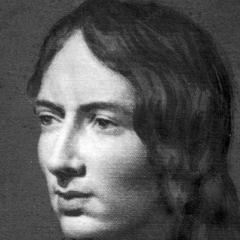
Emily Bronte
Emily Bronte

Emily Brontë was an English novelist, best known for her only novel, 'Wuthering Heights,' which is considered a classic of English literature. The novel is renowned for its profound emotion and unique narrative style. Born on July 30, 1818, she tragically passed away on December 19, 1848. more

You May Also Like

“He had the hypocrisy to represent a mourner: and previous to following with Hareton, he lifted the unfortunate child on to the table and muttered, with peculiar gusto, 'Now, my bonny lad, you are mine! And we'll see if one tree won't grow as crooked as another, with the same wind to twist it!”

“Good words," I replied. "But deeds must prove it also; and after he is well, remember you don't forget resolutions formed in the hour of fear.”

“But there was no hiding from Conscience. Not in new homes and new cars. In travel. In meditation or frantic activity. In children, in good works. On tiptoes or bended knee. In a big career. Or a small cabin. It would find you. The past always did. Which was why... it was vital to be aware of actions in the present. Because the present became the past, and the past grew. And got up, and followed you. And found you... Who wouldn't be afraid of this?”