Quotessence
Home / Quotes / Quote by Gino Severini

Quote by Gino Severini

“In our young days, when Modigliani and I first came to Paris, in 1906, nobody was very clear about ideas. But unconsciously, we knew quite a lot of things, of which we became aware later on.”

Quote by Gino Severini

Author
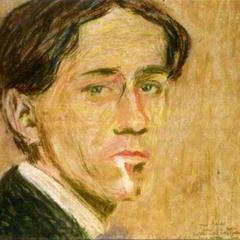
Gino Severini
Gino Severini

Gino Severini (April 7, 1883 – February 26, 1966) was an Italian painter and a leading figure of the Futurist movement. Known for blending Futurism with Cubism, his works often depict motion, speed, and the vitality of modern life. Born in Cortona, Italy, he moved to Rome and later settled in Paris, where he was influenced by French modern art. His masterpieces include 'Dynamic Hieroglyphic of the Bal Tabarin' and 'Portrait of a Cardinal.' Severini's career spanned decades, later shifting to abstraction and decorative arts, leaving a lasting impact on 20th-century modern art. more

You May Also Like

“In the early days the Cubism' method of grasping an object was to go round and round it. The Futurists declared that one had to get inside it. In my opinion the two views can be reconciled in a poetic cognition of the world. But to the very fact that they appealed to the creative depths in the painter by awakening in him hidden forces which were intuitive and vitalizing, the Futurist theories did more than the Cubist principles to open up unexplored and boundless horizons.”

“It should also be born in mind that the research on 'movement' and the dynamic outlook on the world, which were the basis of Futurist theory, in no way required one to paint nothing but speeding cars or ballerinas in action; for a person who is seated, or an inanimate object, though apparently static, could be considered dynamically and suggest dynamic forms. I may mention as an example the 'Portrait of Madame S.' (1912) and the 'Seated Woman' (1914).”

“Futurism and Cubism are comparable in importance to the invention of perspective, for which they substituted a new concept of space. All subsequent movements were latent in them or brought about by them.. ..the two movements cannot be regarded as in opposition to each other, even though they started from opposite points; I maintain [an idea approved by Appolinaire and later by Matisse that they are two extremes of the same sign, tending to coincide at certain points which only the poetic instinct of the painter can discover: 'poetry' being the content and 'raison d'tre' of art.”

“Before my encounter with Thomist philosophy through Maritain, I had almost reached the same conclusions through the logical development of my work, intuition and thought, but what a great sense of joy I felt upon discovering, in Maritain, the confirmation of certain thought patterns, certain ways of clarifying these to myself and to others.”

“Good communication is not just data transfer. You need to show people something that addresses their anxieties, that accepts their anger, that is credible in a very gut-level sense, and that evokes faith in the vision.”