Quotessence
Home / Quotes / Quote by Asra Nomani

Quote by Asra Nomani

“When we think about Islamic feminism, it is not just about women's rights. It's about a more progressive and tolerant expression of Islam in the world for all people. Women's rights is one aspect of it, it's not the end-all, but I also think that the women's issue is the strongest entry point that we've got to challenging extremism. You raise a woman's issue and you get the backs of the conservatives up against the wall faster than just about any other issue in our community. It's the fastest path that we've got to making change happen.”

Quote by Asra Nomani

Author
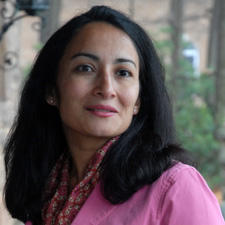
Asra Nomani
Asra Nomani

Asra Nomani is an American journalist and author recognized for her work on Islam and women's rights. Born in 1965, she has written extensively on the intersection of faith and modern life, particularly focusing on the experiences of Muslim women. Nomani's career has been marked by her bold reporting and advocacy for social change. more

You May Also Like

“I think that we don't have, here in the Middle East or in Africa, as much threat to our physical and economic livelihood as women in other parts of the world. But the continuum is the same. The pressures on women to fit into a certain image of a good Muslim girl is the same. The controls and rules are the same, but there are different degrees of it. So, in America, a father will threaten a daughter that he will disown her if she marries the American boyfriend and in Pakistan she faces acid thrown on her face. The power dynamic is the same, it just expresses itself differently.”

“Personally I get so much of my inspiration from women in other countries, so I don't feel like American women are the leaders and I don't agree with the notion that Americans can accomplish more or do more. But I do think that what we can uniquely do here in America is mobilize and galvanize a lot of these ideas and resources. It's a war of ideas. We, Islamic women, are very well supported in this country by institutions, academic and nonprofit, that are already in the field endorsing women's rights and tolerance. The women in other communities have been the pioneers in this work.”

“Talk to me 20 years ago and I had a complete sense of illegitimacy as an American Muslim. I felt like I wasn't authentic. But I don't understand and I don't believe or subscribe to this idea that I don't have a right to speak as a Muslim because I'm an American. Being Muslim is to accept and honor the diversity that we have in this world, culturally and physically, because that's what Islam teaches, that we are people of many tribes. I think the American Muslim experience is of a different tribe than the Saudi Muslim world, but that doesn't make us less than anyone else.”

“One of our greatest challenges here in America is that pogressives don't always stand with the progressive Muslims because in the interest of freedom of religion and civil liberties and political correctness, they don't want to offend cultural choices by Muslims. I know that people have gone to these interfaith sessions at different mosques and they see that the women end up in the basement, but they don't want to challenge anyone because they think, "Oh, well this is your way".”

“I think that initially all I wanted to do was work as an actress, and then, as I started to work more consistently, you start to maybe want to challenge yourself in different ways, so I think it's something that developed over time - this desire to direct and also to produce. I think as you watch other actresses do it so successfully and so gracefully, you're like, I think that would be fun! It's definitely something that has become more of a priority for me.”

“As an actor, you are sort of only in charge of yourself. All you can really control is your performance. You don't know what they're going to do with it in the editing room, what they're going to cut out, which take they're going to use. You know, your control is very limited. As a director, it's ultimately your piece. You have a lot more responsibility, but you also have a lot more creative control. It's scary, but also liberating in a way.”

“The nice thing about a documentary, I think, is that so much of it is editing, too. You sort of get to keep making decisions. It's not as much like when you do a narrative, fictional piece, and you have a certain number of shooting days, and you're like, "Well, that's what it is." You can continue to seek out more photographs or try to find more footage. The genre gives you the ability to keep working on it, which is great for a first-time director.”

“If you just look at the number of roles for women versus the number of roles for men in any given film, there are always far more roles for men. That's always been true. When I went to college, I went to Julliard. At that time - and I don't know if this is still true - they always selected fewer women than men for the program, because there were so few roles for women in plays. That was sort of acknowledgment for me of the fact that writers write more roles for men than they do for women.”

“The amazing thing about working on new platforms is that there is a great deal of excitement. You know, these things - they're brand new. They're trying to figure it out. And so if you're a show that they're supporting, they're going to put a tremendous amount of energy behind you. They're open to new ideas, new ways of promoting a show, and I think that feels really exciting, because network TV sort of feels like a formula. They give you a couple of weeks, and if it works, it works, and if it doesn't, you're most likely going to get cancelled.”

“There are so many times in my life when I wish I had the power to destroy anyone who would threaten or seek to humiliate the people I love. When you were a small, shy, awkward kid like me, and you saw and experienced some of the things I did and you can do nothing, you're going to gravitate to those comic books and fantasies where the nerd gets bit by a radioactive spider and can beat up the bad guys.”