Quotessence
Home / Quotes / Quote by Willa Cather

Quote by Willa Cather

“Pity is sworn servant unto love: And this be sure, wherever it begin To make the way, it lets your master in.”

Quote by Willa Cather

Author
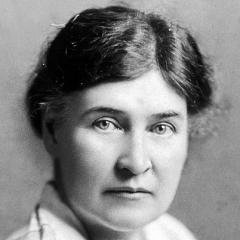
Willa Cather
Willa Cather

American author known for her depictions of the American Midwest. Cather's works often feature female protagonists, showcasing their resilience and growth in challenging environments. Her notable works include 'My Ántonia' and 'O Pioneers!' more

You May Also Like

“The "sayings" of a community, its proverbs, are its characteristic comment upon life; they imply its history, suggest its attitude toward the world and its way of accepting life. Such an idiom makes the finest language any writer can have; and he can never get it with a notebook. He himself must be able to think and feel in that speech - it is a gift from heart to heart.”

“Every American travelling in England gets his own individual sport out of the toy passenger and freight trains and the tiny locomotives, with their faint, indignant, tiny whistle. Especially in western England one wonders how the business of a nation can possibly be carried on by means so insufficient.”

“If the street life, not the Whitechapel street life, but that of the common but so-called respectable part of town is in any city more gloomy, more ugly, more grimy, more cruel than in London, I certainly don't care to see it. Sometimes it occurs to one that possibly all the failures of this generation, the world over, have been suddenly swept into London, for the streets are a restless, breathing, malodorous pageant of the seedy of all nations.”

“No one can build his security upon the nobleness of another person. Two people, when they love each other, grow alike in their tastes and habits and pride, but their moral natures (whatever we may mean by that canting expression) are never welded. The base one goes on being base, and the noble one noble, to the end.”

“Whatever is felt upon the page without being specifically named there - that, one might say, is created. It is the inexplicable presence of the thing not named, of the overtone divined by the ear but not heard by it, the verbal mood, the emotional aura of the fact or the thing or the deed, that gives high quality to the novel or the drama, as well as to poetry itself.”