Quotessence
Home / Quotes / Quote by Monica Seles

Quote by Monica Seles

“I have to live for the day, and not worry about or try to know what tomorrow brings.... if I've learned one thing from all that'shappened to me, it's that if you would know what tomorrow brings, you may not want to live it.”

Quote by Monica Seles

Author
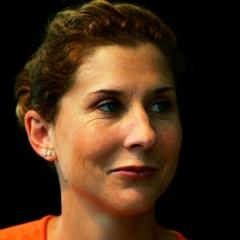
Monica Seles
Monica Seles

Monica Seles, born on December 2, 1973, is a former professional tennis player. She achieved significant success in the world of women's tennis, particularly in singles. Seles rose rapidly to the top of the rankings in the early 1990s and became one of the world's best players. Known for her powerful serve and exceptional net play, she won nine Grand Slam singles titles, including two French Open and two Wimbledon championships. more

You May Also Like

“I decided that I want to live the rest of my life happy with what I'm doing. So when I play tennis again, I have to play it for the right reason. I don't want to play to get my No. 1 ranking back. I don't want to play for the attention, or to earn more. I don't even want to play because the world wants to see me do it, even though it's nice to know that the world is interested. I only want to play because I love the game, which is the reason I began to play at age seven in the first place.”

“One might get the impression that I recommend a new methodology which replaces induction by counterinduction and uses a multiplicity of theories, metaphysical views, fairy tales, instead of the customary pair theory/observation. This impression would certainly be mistaken. My intention is not to replace one set of general rules by another such set: my intention is rather to convince the reader that all methodologies, even the most obvious ones, have their limits.”

“There is not a single rule, however plausible, and however firmly grounded in epistemology, that is not violated at some time or other. It becomes evident that such violations are not accidental events, they are not results of insufficient knowledge or of inattention which might have been avoided. On the contrary, we see that they are necessary for progress.”