Quotessence
Home / Quotes / Quote by F. David Peat

Quote by F. David Peat

“It is as if the formation of patterns within the unconscious mind is accompanied by physical patterns in the outer world. In particular, as psychic patterns are on the point of reaching consciousness, the synchronicities reach their peak; moreover, they generally disappear as the individual becomes consciously aware of a new alignment of forces within his or her own personality...It is as if the internal restructuring produces external resonance, or as if a burst of 'mental energy' is propagated outward onto the world.”

Quote by F. David Peat

Author
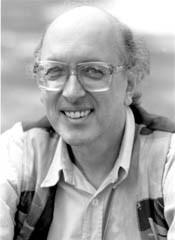
F. David Peat
F. David Peat

F. David Peat is a renowned physicist, born on April 18, 1938. He has made significant contributions to quantum physics, complexity science, and systems theory. more

You May Also Like

“...situations evolve as matter responds to the conditioning of time and space...If you know what is contained in time from its beginning to its end you are somehow no longer in time. Even though you still have a body and still eat and do what you do, you have discovered something that liberated you into a satisfying all-at-oneness.”

“Objects obey quantum laws- they spread in possibility following the equation discovered by Erwin Schodinger- but the equation is not codified within the objects. Likewise, appropriate non-linear equations govern the dynamical response of bodies that have gone through the conditioning of quantum memory, although this memory is not recorded in them. Whereas classical memory is recorded in objects like a tape, quantum memory is truly the analog of what the ancients call Akashic memory, memory written in Akasha, Emptiness- nowhere.”

“What is at the higher levels of meaning consciousness is like a hyperspace in which each point is equidistant from the other and where 'the center is everywhere and the circumference is nowhere'? The mythologies of the occult seem like baroque music: there is an overall similar quality of sound and movement, but, upon examination, each piece of music is unique; Vivaldi and Scarlatti are similar and different.”