“Long intervals frequently elapse between the discovery of new principles in science and their practical application... Those intellectual qualifications, which give birth to new principles or to new methods, are of quite a different order from those which are necessary for their practical application.”
Quote by Charles Babbage
Work
Reflections on the Decline of Science in England: And on Some of Its Causes, by Charles Babbage (1830). To which is Added On the Alleged Decline of Science in England, by a Foreigner (Gerard Moll) with a Foreword by Michael Faraday (1831).
Reflections on the Decline of Science in England is a scholarly work that examines the factors contributing to the perceived decline of scientific progress in England. It includes essays by Charles Babbage and Gerard Moll, offering different perspectives on the issue. The book is further enhanced by a foreword written by Michael Faraday, a prominent scientist of the time. Published in two parts in 1830 and 1831, the work reflects the intellectual climate of the early 19th century and the concerns of its authors regarding the state of science in their country. more
Author
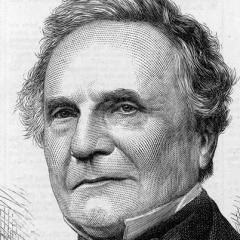
Charles Babbage
Charles Babbage, born on December 26, 1791 and died on October 18, 1871, was a renowned British mathematician, inventor, and engineer, often referred to as the 'father of computers'. He made significant contributions in the fields of mathematics, astronomy, and mechanical engineering, and his designs of the Difference Engine and the Analytical Engine laid the foundation for the development of computer science. more
You May Also Like
“The future is uncertain... but this uncertainty is at the very heart of human creativity.”
Source: Mein Kampf
Source: Churchill speaks: Winston S. Churchill in peace and war : collected speeches, 1897-1963
Source: Science and the Modern World
Source: Next Generation Leader