Quotessence
Home / Quotes / Quote by Thomas Carlyle

Quote by Thomas Carlyle

“Manhood begins when we have in any way made truce with Necessity; begins even when we have surrendered to Necessity, as the most part only do; but begins joyfully and hopefully only when we have reconciled ourselves to Necessity; and thus, in reality, triumphed over it, and felt that in Necessity we are free.”

Quote by Thomas Carlyle

Work

The Works of Thomas Carlyle

This compilation includes a variety of works by Carlyle, showcasing his insights on history, literature, and social issues. It features his famous lectures such as 'On Heroes, Hero-Worship, and the Heroic in History' and 'The French Revolution', as well as his philosophical treatises and critical essays. more

Author
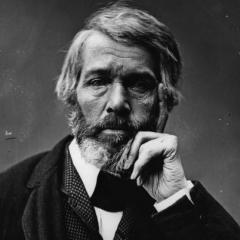
Thomas Carlyle
Thomas Carlyle

Thomas Carlyle, born on December 4, 1795, and died on February 5, 1881, was a prominent Scottish philosopher, historian, and writer. His works are known for their profound social criticism and unique literary style, which had a significant impact on 19th-century British literature and thought. more

You May Also Like

“We have our little theory on all human and divine things. Poetry, the workings of genius itself, which, in all times, with one or another meaning, has been called Inspiration, and held to be mysterious and inscrutable, is no longer without its scientific exposition. The building of the lofty rhyme is like any other masonry or bricklaying: we have theories of its rise, height, decline and fall -- which latter, it would seem, is now near, among all people.”

“Hero-worship is the deepest root of all; the tap-root, from which in a great degree all the rest were nourished and grown . . . Worship of a Hero is transcendent admiration of a Great Man. I say great men are still admirable; I say there is, at bottom, nothing else admirable! No nobler feeling than this of admiration for one higher than himself dwells in the breast of men.”

“All sorts of Heroes are intrinsically of the same material; that given a great soul, open to the Divine Significance of Life, then there is given a man fit to speak of this, to sing of this, to fight and work for this, in a great, victorious, enduring manner; there is given a Hero, -- the outward shape of whom will depend on the time and the environment he finds himself in.”

“We were wise indeed, could we discern truly the signs of our own time; and by knowledge of its wants and advantages, wisely adjust our own position in it. Let us, instead of gazing idly into the obscure distance, look calmly around us, for a little, on the perplexed scene where we stand. Perhaps, on a more serious inspection, something of its perplexity will disappear, some of its distinctive characters and deeper tendencies more clearly reveal themselves; whereby our own relations to it, our own true aims and endeavors in it, may also become clearer.”

“Cherish what is dearest while you have it near you, and wait not till it is far away. Blind and deaf that we are; oh, think, if thou yet love anybody living, wait not till death sweep down the paltry little dust clouds and dissonances of the moment, and all be made at last so mournfully clear and beautiful, when it is too late.”

“The Great Man's sincerity is of the kind he cannot speak of, is not conscious of: nay, I suppose, he is conscious rather of insincerity; for what man can walk accurately by the law of truth for one day? No, the Great Man does not boast himself sincere, far from that; perhaps does not ask himself if he is so: I would say rather, his sincerity does not depend on himself; he cannot help being sincere!”

“A fundamental mistake to call vehemence and rigidity strength! A man is not strong who takes convulsion-fits; though six men cannot hold him then. He that can walk under the heaviest weight without staggering, he is the strong man . . . A man who cannot hold his peace, till the time come for speaking and acting, is no right man.”

“In a symbol there is concealment and yet revelation: here therefore, by silence and by speech acting together, comes a double significance. In the symbol proper, what we can call a symbol, there is ever, more or less distinctly and directly, some embodiment and revelation of the Infinite; the Infinite is made to blend itself with the Finite, to stand visible, and as it were, attainable there. By symbols, accordingly, is man guided and commanded, made happy, made wretched.”