Quotessence
Home / Quotes / Quote by Leo Tolstoy

Quote by Leo Tolstoy

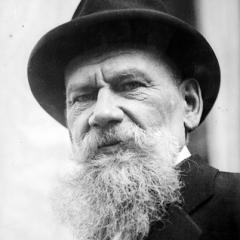
“All men's instincts, all their impulses in life, are efforts to increase their freedom. Wealth and poverty, health and disease, culture and ignorance, labor and leisure, repletion and hunger, virtue and vice, are all terms for greater or less degree of freedom.”

Quote by Leo Tolstoy

Work

War and Peace

A profound and sweeping narrative that delves into the complexities of human relationships and the impact of historical events on individuals, "War and Peace" is renowned for its rich character development and intricate portrayal of the Napoleonic era. more

Author

Leo Tolstoy
Leo Tolstoy

Leo Tolstoy was a Russian writer and thinker, a prominent representative of 19th-century Russian literature. His works deeply revealed social contradictions and human nature, and had a profound impact on the world. more

You May Also Like

“Slavery results from laws, laws are made by governments, and, therefore people can only be freed from slavery by the abolition of governments.... And it is time for people to understand that governments not only are not necessary, but are harmful and most highly immoral institutions, in which a self-respecting, honest man cannot and must not take part.”

“Terror, as the demonstration of the will and strength of the working class, is historically justified, precisely because the proletariat was able thereby to break the political will of the intelligentsia, pacify the professional man of various categories and work, and gradually subordinate them to its own aims within the field of their specialties.”

“Anarchism may be described as the doctrine that all the affairs of men should be managed by individuals or voluntary associations, and that the State should be abolished..... Nor does the Anarchistic scheme furnish any code of morals to be imposed upon the individual. "Mind your own business" is its own moral law. Interference with another's business is a crime and the only crime, and as such may properly be resisted.”

“A word about 'plain English.' The phrase certainly shouldn't connote drab and dreary language. Actually, plain English is typically quite interesting to read. It's robust and direct-the opposite of gaudy, pretentious language. You achieve plain English when you use the simplest, most straightforward way of expressing an idea. You can still choose interesting words. But you'll avoid fancy ones that have everyday replacements meaning precisely the same thing.”