“In fundamental theory socialism and democracy are almost if not quite one and the same. They both rest at bottom upon the absolute right of the community to determine its own destiny and that of its members. Men as communities are supreme over men as individuals. Limits of wisdom and convenience to the public control there may be: limits of principle there are, upon strict analysis, none.”
Quote by Woodrow Wilson
Work
The papers of Woodrow Wilson
This book series provides an extensive archive of official papers, personal letters, and other historical documents related to the presidency of Woodrow Wilson. It offers a detailed look into the decision-making process and the political landscape of the early 20th century. more
Author
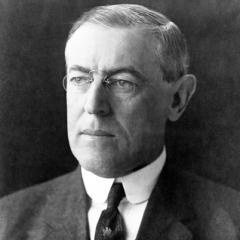
Woodrow Wilson
Woodrow Wilson was the 28th President of the United States, known for his foreign policy during World War I and his efforts at the Paris Peace Conference. He advocated for the New Freedom policy and had a deep academic background in history, politics, and economics. more
You May Also Like
Source: The Quotable George Washington: The Wisdom of an American Patriot
Source: The Federalist, on the new constitution, written in 1788, with an appendix, containing the letters of Pacificus and Helvidius on the proclamation of neutrality of 1793, also the original articles of confederation and the constitution of the United States
Source: The Federalist: With Letters of Brutus
Source: The works of Alexander Hamilton; compris. his corresp. and his polit. and official writings, excl. of the federalist, civil and military. Ed. by John C. Hamilton
“Here sir, the people govern.”
Source: Selected writings and speeches of Alexander Hamilton
Source: The Works of Alexander Hamilton: Miscellanies, 1774-1789: A full vindication; The farmer refuted; Quebec bill; Resolutions in Congress; Letters from Phocion; New-York Legislature, etc
Source: The Federalist: A Commentary on the Constitution of the United States
Source: The Essential Federalist: A New Reading of the Federalist Papers
Source: Light and Liberty: Reflections on the Pursuit of Happiness