Quotessence
Home / Quotes / Quote by Iris Murdoch

Quote by Iris Murdoch

Work

Henry and Cato

This book follows the story of Henry and Cato, two characters who embark on a journey together, facing challenges and forming a deep bond along the way. more
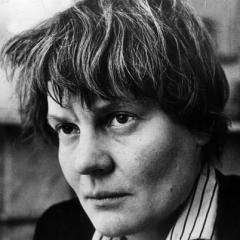
Author

Iris Murdoch
Iris Murdoch

Iris Murdoch was an Irish-Canadian philosopher and author, born on July 15, 1919, in Dublin, Ireland, and passed away on February 8, 1999. She is celebrated for her philosophical novels that intertwine moral and ethical dilemmas with complex narratives. Murdoch's work has left a lasting impact on the literary world, particularly in the latter half of the 20th century. more

You May Also Like

“Since humanity came into being, man hath enjoyed himself too little: that alone, my brethren, is our original sin! And when we learn better to enjoy ourselves, then do we unlearn best to give pain unto others, and to contrive pain. Therefore do I wash the hand that hath helped the sufferer; therefore do I wipe also my soul. For in seeing the sufferer suffering – thereof was I ashamed on account of his shame; and in helping him, sorely did I wound his pride.”

“My brother was philosophically impaired, emotionally paralysed and stubborn, but he was not mentally ill. Mental illness suggests some kind of biological maladjustment such as that caused by injury or drug-induced chemical imbalances, whereas my brother, like many male suicides I have known, reacted normally to an abnormal situation. My brother felt he could not show the suffering that revealed him as sensitive; to do so would have threatened his gender status. It was easier for him to die.”

“We suffer because we feel we are giving more than we receive. We suffer because our love is going unrecognized. We suffer because we are unable to impose our own rules. But ultimately there is no good reason for our suffering, for in every love lies the seed of our growth. The more we love, the closer we come to spiritual experience. Those who are truly enlightened, those whose souls are illuminated by love, have been able to overcome all of the inhibitions and preconceptions of their era. They have been able to sing, to laugh, and to pray out loud; they have danced and shared what Saint Paul called 'the madness of saintliness.' They have been joyful - because those who love conquer the world and have no fear of loss.”