Quotessence
Home / Quotes / Quote by Philip Roth

Quote by Philip Roth

Work

The Ghost Writer

In this gripping thriller, the protagonist, a skilled ghostwriter, finds himself entangled in a dangerous web of secrets and lies as he works on the memoirs of a former Prime Minister. The story unfolds with a blend of intrigue and psychological tension, as the ghostwriter uncovers dark truths about the politician's past and the mysterious circumstances surrounding his death. more
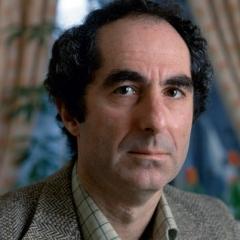
Author

Philip Roth
Philip Roth

Philip Roth (1933-2018) was one of America's most influential contemporary novelists, renowned for his profound explorations of Jewish-American identity, sexuality, politics, and the human condition. His breakthrough work, "Portnoy's Complaint" (1969), became a landmark in American literature. Roth received two National Book Awards and was a multiple-time Pulitzer Prize finalist. Over his six-decade career, he published more than 30 books that significantly shaped American fiction. He passed away in New York City on May 22, 2018, at age 85. more

You May Also Like

“The city of Paris, France, became a place of refuge for biracial Americans during slavery and at the time of the Harlem Renaissance for black musicians, fine artists, writers and others seeking opportunities to practice their craft free from American racism.”

“There are so many works of the mind, so much humanity, that to disburden ourselves of ourselves is an understandable temptation. Open a book and a voice speaks. A world, more or less alien or welcoming, emerges to enrich a reader's store of hypotheses about how life is to be understood. As with scientific hypotheses, even failure is meaningful, a test of the boundaries of credibility. So many voices, so many worlds, we can weary of them. If there were only one human query to be heard in the universe, and it was only the sort of thing we were always inclined to wonder about--Where did all this come from? or, Why could we never refrain from war?--we would hear in it a beauty that would overwhelm us. So frail a sound, so brave, so deeply inflected by the burden of thought, that we would ask, Whose voice is this? We would feel a barely tolerable loneliness, hers and ours. And if there were another hearer, not one of us, how starkly that hearer would apprehend what we are and were.”

“Walking under Dusk, Moonlit leaf shadows were cast on my skin from the trees above, every step I took was taking a step deeper into magic. Silent whispers of mystical mouthes pulling me in deeper. Then the lights from inside the house turned on. A few seconds later, the fence lights went on. Just like that, the leafy ghosts on my skin ran away and the faery voices ran home. It seems like the creations of man kill magic in so many ways— even the light bulb does this! Oh to be a race of people designing magical things, if someone could capture pieces of Moonlight and place it in a jar; or other things like that, then we could stop killing the magic and be filled with it instead. Or maybe we are already always filled with it. It's the bringing out that we have trouble with. Stop being a doorknob, darling! Be magical, instead!”

“I decided (after listening to a "talk radio" commentator who abused, vilified, and scorned every noble cause to which I had devoted my entire life) that I was both a humanist and a liberal, each of the most dangerous and vilified type. I am a humanist because I think humanity can, with constant moral guidance, create a reasonably decent society. I am terrified of restrictive religious doctrine, having learned from history that when men who adhere to any form of it are in control, common men like me are in peril. I do not believe that pure reason can solve the perpetual problems unless it is modified by poetry and art and social vision. So I am a humanist. And if you want to charge me with being the most virulent kind—a secular humanist—I accept the accusation. [Interview, Parade magazine, 24 November 1991]”

“The unification of the planet's history, that humanist dream which God has spitefully allowed to come true, has been accompanied by a process of dizzying reduction. True, the termites of reduction have always gnawed away at life: even the greatest love ends up as a skeleton of feeble memories. But the character of modern society hideously exacerbates this curse: it reduces man's life to its social function; the history of a people to a small set of events that are themselves reduced to a tendentious interpretation; social life is reduced to political struggle, and that in turn to the confrontation of just two great global powers.”

“Как только люди начали мыслить в этом направлении, больше не оставалось места для Бога и для человека как такового. Когда психология и социология стали частью закрытой причинно-следственной системы наравне с физикой, астрономией и химией, скончался не только Бог. Скончался человек. И в рамках этого мировоззрения умерла любовь. В пределах полностью закрытой причинно-следственной системы нет места для любви. В этой системе нет места для нравственности, в ней нет места для человеческой свободы. Человек превращается в нуль. Люди, вместе со всем, что они совершают, становятся частью механистической структуры.”