Quotessence
Home / Quotes / Quote by Gaston Bachelard

Quote by Gaston Bachelard

“In my Paris apartment, when a neighbor drives nails into the wall at an undue hour, I "naturalize" the noise by imagining that I am in my house in Dijon, where I have a garden. And finding everything I hear quite natural, I say to myself: "That's my woodpecker at work in the acacia tree." This is my method for obtaining calm when things disturb me.”

Quote by Gaston Bachelard

Work

The Poetics of Space

This book delves into the philosophical and emotional aspects of spaces in architecture, analyzing their impact on human experience and perception. more

Author

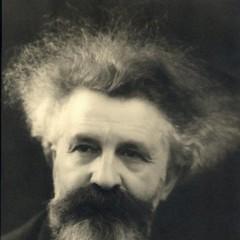
Gaston Bachelard
Gaston Bachelard

French philosopher known for his work in epistemology, poetics, and the philosophy of science. His writings have had a profound impact on 20th-century philosophy, particularly in understanding human cognition and the scientific method. more

You May Also Like

“Naturalization, on the other hand, also proved to be a failure. The whole naturalization system of European countries fell apart when it was confronted with stateless people, and this for the same reasons that the right of asylum had been set aside. Essentially naturalization was an appendage to the nation-state's legislation that reckoned only with "nationals," people born in its territory and citizens by birth. Naturalization was needed in exceptional cases, for single individuals whom circumstances might have driven into a foreign territory. The whole process broke down when it became a question of handling mass applications for naturalization: even from the purely administrative point of view, no European civil service could possibly have dealt with the problem. Instead of naturalizing at least a small portion of the new arrivals, the countries began to cancel earlier naturalizations, partly because of general panic and partly because the arrival of great masses of newcomers actually changed the always precarious position of naturalized citizens of the same origin. Cancellation of naturalization or the introduction of new laws which obviously paved the way for mass denaturalization shattered what little confidence the refugees might have retained in the possibility of adjusting themselves to a new normal life; if assimilation to the new country once looked a little shabby or disloyal, it was now simply ridiculous. The difference between a naturalized citizen and a stateless resident was not great enough to justify taking any trouble, the former being frequently deprived of important civil rights and threatened at any moment with the fate of the latter. Naturalized persons were largely assimilated to the status of ordinary aliens, and since the naturalized had already lost their previous citizenship, these measures simply threatened another considerable group with statelessness.”

“Ready yourselves!' Mullone heard himself say, which was strange, he thought, for he knew his men were prepared. A great cry came from beyond the walls that were punctuated by musket blasts and Mullone readied himself for the guns to leap into action. Mullone felt a tremor. The ground shook and then the first rebels poured through the gates like an oncoming tide. Mullone saw the leading man; both hands gripping a green banner, face contorted with zeal. The flag had a white cross in the centre of the green field and the initials JF below it. John Fitzstephen. Then, there were more men behind him, tens, then scores. And then time seemed to slow. The guns erupted barely twenty feet from them. Later on, Mullone would remember the great streaks of flame leap from the muzzles to lick the air and all of the charging rebels were shredded and torn apart in one terrible instant. Balls ricocheted on stone and great chunks were gouged out by the bullets. Blood sprayed on the walls as far back as the arched gateway, limbs were shorn off, and Mullone watched in horror as a bloodied head tumbled down the sloped street towards the barricade. 'Jesus sweet suffering Christ!' Cahill gawped at the carnage as the echo of the big guns resonated like a giant's beating heart. Trooper O'Shea bent to one side and vomited at the sight of the twitching, bleeding and unrecognisable lumps that had once been men. A man staggered with both arms missing. Another crawled back to the gate with a shattered leg spurting blood. The stench of burnt flesh and the iron tang of blood hung ripe and nauseating in the oppressive air. One of the low wooden cabins by the wall was on fire. A blast of musketry outside the walls rattled against the stonework and a redcoat toppled backwards onto the cabin's roof as the flames fanned over the wood. 'Here they come again! Ready your firelocks! Do not waste a shot!' Johnson shouted in a steady voice as the gateway became thick with more rebels. He took a deep breath. 'God forgive us,' Corporal Brennan said. 'Liberty or death!' A rebel, armed with a blood-stained pitchfork, shouted over-and-over.”

“We zijn zeventien, achttien, negentien, halfgaar uit de mallen van onze respectievelijke gezinnen gerold en nu, zonder die behuizing, zonder die vaste vorm, lijkt het alsof we uitvloeien. We zoeken naar een leven dat bij ons gaat passen. Een karakter, een imago, een stijl, een doel misschien of anders in elk geval een typische eigenschap of opvallend taalgebruik. Iedereen kan niet wachten de eerste stappen te zetten en tegelijkertijd jaagt het ons allemaal grote angst aan.”