Quotessence
Home / Quotes / Quote by W. Phillip Keller

Quote by W. Phillip Keller

“It is becoming fashionable to scorn the idea of sin in society. The impact of humanistic thinking is to belittle the concept that man is corrupt. Psychologists and psychiatrists would persuade us that people really are not responsible for their wrongs. Rather, the view of sociologists is that the environment is all wrong. Their cry is, 'Change society and you will get better men and women'. It simply does not happen. Christ's call is, 'Change men and women and you will get a better society'. This does work. It always has.”

Quote by W. Phillip Keller

Work

Salt For Society

Browse quotes and source details for this work. more

Author

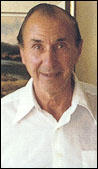
W. Phillip Keller
W. Phillip Keller

W. Phillip Keller, born in 1920 in the United States, was a renowned Christian author. His works, which convey Christian faith in an accessible manner, have won the hearts of readers. Keller's life experience was rich, as he served as a pilot during World War II and then turned to writing after the war. His first book, 'The Song of the Loon,' was published in 1955 and quickly became a bestseller. more

You May Also Like

“...if pride, that plague of human nature, that source of so much misery, did not hinder it; for this vice does not measure happiness so much by its own conveniences, as by the misery of others; and would not be satisfied with being thought a goddess, if none were left that were miserable, over whom she might insult. Pride thinks its own happiness shines the brighter, by comparing it with the misfortunes of other persons; that by displaying its own wealth they may feel their poverty the more sensibly.”

“but in Utopia, where every man has a right to everything, they all know that if care is taken to keep the public stores full no private man can want anything; for among them there is no unequal distribution, so that no man is poor, none in necessity, and though no man has anything, yet they are all rich; for what can make a man so rich as to lead a serene and chreerful life, free from anxieties; neither apprehending want himself, nor vexed with the endless complaints of his wife?”

“The First Mobile, if one is sent, must be warned that unless he is very self-assured, or senile, his pride will suffer. A man wants his virility regarded, a woman wants her femininity appreciated, however indirect and subtle the indications of regard and appreciation. On Winter they will not exist. One is respected and judged only as a human being. It is an appalling experience.”

“All my moral and intellectual being is penetrated by an invincible conviction that whatever falls under the dominion of our senses must be in nature and, however exceptional, cannot differ in its essence from all the other effects of the visible and tangible world of which we are a self-conscious part. The world of the living contains enough marvels and mysteries as it is—marvels and mysteries acting upon our emotions and intelligence in ways so inexplicable that it would almost justify the conception of life as an enchanted state. No, I am too firm in my consciousness of the marvelous to be ever fascinated by the mere supernatural which . . . is but a manufactured article, the fabrication of minds insensitive to the intimate delicacies of our relation to the dead and to the living, in their countless multitudes; a desecration of our tenderest memories; an outrage on our dignity.”

“The problem, however, is that I have yet to meet anyone, materialist or otherwise, who was able to dispense with value judgements. On the contrary, the literature of materialism is peculiarly marked by its wholesale profusion of denunciations of all sorts. Starting with Marx and Nietzsche, materialists have never been able to refrain from passing continuous moral judgement on all and sundry, which their whole philosophy might be expected to discourage them from doing.”

“It portrayed motherhood as the highest position that a woman could achieve. For God had made Mary neither a prophet nor the messiah nor the daughter of God. Nor did God take the form of a woman. She was only the womb. She was a perpetual virgin too, and she endured the vilest harassment because of it, or so the story went. Rebecca couldn’t relate to the Virgin Mary at all.”