Quotessence
Home / Quotes / Quote by T. Colin Campbell

Quote by T. Colin Campbell

“With industry's sales and marketing machines cloaked in mantles of charitable virtue, no wonder most Americans don't realize that the junk that passes for food is in fact the biggest contributor to our health crisis, and the junk that passes for medicine keeps us just well enough to continue to spend on both the food and the medicine.”

Quote by T. Colin Campbell

Work

Whole: Rethinking the Science of Nutrition

This book delves into the complexities of nutrition science, offering a fresh perspective on how dietary choices impact overall health and wellness. more

Author
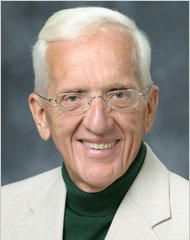
T. Colin Campbell
T. Colin Campbell

T. Colin Campbell is a renowned biochemist known for his contributions to the fields of nutrition and cancer research. His research has focused on the impact of a plant-based diet on health, particularly in the prevention of cancer. Professor Campbell's work has had a profound influence on global health and dietary practices. more

You May Also Like

“By now, I hope you recognize this as one more example of the reductionist paradigm at work, even when it's couched in natural and alternative terms. As we saw in chapter ten, one of the major problems with modern medicine is its reliance on isolated, unnatural chemical pharmaceuticals as the primary tool in the war against disease. But the medical profession isn't the only player in the health-care system that has embraced this element of reductionism. The natural health community has also fallen prey to the ideology that chemicals ripped from their natural context are as good as or better than whole foods. Instead of synthesizing the presumed "active ingredients" from medicinal herbs, as done for prescription drugs, supplement manufacturers seek to extract and bottle the active ingredients from foods known or believed to promote good health and healing. And just like prescription drugs, the active agents function imperfectly, incompletely, and unpredictably when divorced from the whole plant food from which they're derived or synthesized.”

“Can these foods [low-fat, vitamin-enriched, etc] even be called "healthy"? Perhaps we should think about it this way: If you cut a batch of pharmaceutical-grade cocaine with chai, you could say with some degree of honesty that it is "healthier," "less addictive," and "now with chai!" But would you say it's "good for you"?”

“Their [plant secondary compounds] healthful effects in humans, however, are not well understood, in part because things in nature like coriander and basil can't be patented so there isn't a lot of money being thrown at them, and in part because long-term studies that measure small effects of low doses are expensive and don't yield the kind of unambiguous, major effects you get with pharmaceuticals, but mainly because preventions are never as exciting as cures.”

“If we limit our sight to individual players, we'll never see the big picture. The issue is a systemic one, maintained by interconnected actors, all acting in their self-interest to further their goals. The trouble is not, or not always, the actors themselves, or their intrinsic motivations. Instead, it's the overarching goal of the entire system that's at fault: corporate profit above public health.”