Quotessence
Home / Quotes / Quote by Jacques Barzun

Quote by Jacques Barzun

“Strangers who have seen Shaw face to face are wont to report their surprise at his gentleness and consideration, his willingness to listen and his complete lack of pose.”

Quote by Jacques Barzun

Author
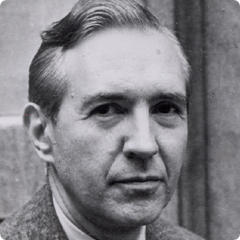
Jacques Barzun
Jacques Barzun

Jacques Barzun was an American historian, born on November 30, 1907, and passed away on October 25, 2012. He was renowned for his profound insights into Western culture, literature, and history, and is considered one of the most important cultural critics of the 20th century. more

You May Also Like

“Shaw does not merely decorate a proposition, but makes his way from point to point through new and difficult territory. This explains why Shaw must either be taken whole or left alone. He must be disassembled and put together again with nothing left out, under pain of incomprehension; for his politics, his art, and his religion - to say nothing of the shape of his sentences - are unique expressions of this enormously enlarged and yet concentrated consciousness.”

“On the one hand, society needs a common faith and vigorous institutions with the power to coerce; and on the other, the individual as a human soul or as the bearer of a new and possibly saving heresy, must be free. It is difficult enough to reconcile these two needs, but the problem holds another hazard: the need of action under the pressure of time.”

“Criticism will need an injection of humility that is, a recognition of its role as ancillary to the arts, needed only occasionally in a temporary capacity. Since the critic exists only for introducing and explaining, he must be readily intelligible; he has no special vocabulary: criticism is in no way a science or a system.”

“On reflection, moral judgment in the arts appears rather as a tribute to their power to influence emotion and possibly conduct. And reflecting further on what some critics do today, one sees that a good many have merely shifted the ground of their moralism, transferring their impulse of righteousness to politics and social issues.”

“Can an idea a notion as abstract as Relativism produce by itself the effects alleged? cause all the harm, destroy all the lives and reputations? I am as far as anyone can be from denying the power of ideas in history, but the suggestion that a philosophy (as Relativism is often called) has perverted millions and debased daily life is on the face of it absurd. No idea working alone has ever demoralized society, and there have been plenty of ideas simpler and more exciting than Relativism.”

“The ever-present impulse is to push against restriction and, in so doing, to feel intolerably hemmed in. Thus in practice, every liberation increases the sense of oppression. Nor is the paradox merely in the mind: the laws enacted to secure the rights of every person and group, by creating protective boundaries, create new barriers.”

“A person is not a democrat thanks to his ignorance of literature and the arts, nor an elitist because he or she has cultivated them. The possession of knowledge makes for unjust power over others only if used for that very purpose: a physician or lawyer or clergyman can exploit or humiliate others, or he can be a humanitarian and a benefactor. In any case, it is absurd to conjure up behind anybody who exploits his educated status the existence of an "elite" scheming to oppress the rest of us.”

“The eager or dutiful persons who subject themselves to these tidal waves of the classics and the moderns find everything wonderful in an absent-minded way. The wonder washes over them rather than into them, and one of its effects is to make anything shocking or odd suddenly interesting enough to gain a month's celebrity. And so another by-product of our come-one, come-all policy is the tendency to reward cleverness, not art, and to put one more hurdle in the path of the truly original artist.”