Quotessence
Home / Quotes / Quote by Robert Frost

Quote by Robert Frost

Work

The poetry of Robert Frost

This book presents a curated selection of Robert Frost's most celebrated works, reflecting his deep engagement with nature, rural life, and the complexities of human experience. Frost's poetry is characterized by its conversational tone, vivid imagery, and philosophical depth, making it a cornerstone of American literature. more

Author
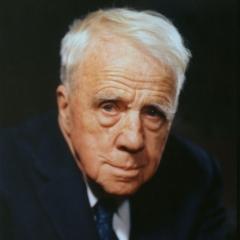
Robert Frost
Robert Frost

Robert Frost, born on March 26, 1874, and died on January 29, 1963, was one of the most renowned poets of the 20th century in the United States. He is known for his profound philosophy and unique poetic style, which often explores themes such as nature, life, and morality. more

You May Also Like

“... life is moral responsibility. Life is several other things, we do not deny. It is beauty, it is joy, it is tragedy, it is comedy, it is psychical and physical pleasure, it is the interplay of a thousand rude or delicate motions and emotions, it is the grimmest and the merriest motley of phantasmagoria that could appeal to the gravest or the maddest brush ever put to palette; but it is steadily and sturdily and always moral responsibility.”

“I think that today, more so than ever, corporate responsibility is the best strategic as well as financial path that most businesses can follow. For most businesses there are both compelling reasons to be responsible and compelling statistics that validate that responsible businesses do better according to traditional financial metrics. Of course, how you define "responsible" is somewhat of a conundrum.”

“The sun had, in the meanwhile, sunk behind the Ettersberg. We felt in the wood the chill of the evening, and drove all the quicker to Wiemar, and to Goethe's house. Goethe urged me to go in with him for a while, and I did so. He was in an extremely engaging mood. He talked a great deal about his theory of colors, and of his obstinate opponents; remarking that he was sure that he had done something in this science.”

“The curve of life is like the parabola of a projectile which, disturbed from its initial state of rest, rises and then returns to a state of repose... Like a projectile flying to its goal, life ends in death. Even its ascent and its zenith are only steps and means to this goal... For, enlightenment or no enlightenment, consciousness or no consciousness, nature prepares itself for death.”