“Science would be ruined if (like sports) it were to put competition above everything else, and if it were to clarify the rules of competition by withdrawing entirely into narrowly defined specialties. The rare scholars who are nomads-by-choice are essential to the intellectual welfare of the settled disciplines.”
Quote by Benoit Mandelbrot
Author
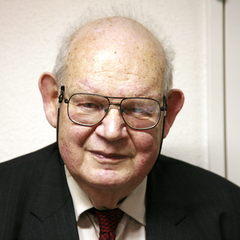
Benoit Mandelbrot
Benoit Mandelbrot, born on November 20, 1924, and died on October 14, 2010, was a renowned mathematician. He made groundbreaking contributions to fractal geometry, proposing the theory of fractals, which has been widely applied in various fields such as physics, biology, and economics. more
You May Also Like
“Scientific truth will out, you can't hide the sun under a stone.”
Source: Education: Intellectual, Moral, and Physical
Source: Structure of Social Action
Source: Reflections on the Decline of Science in England: And on Some of Its Causes, by Charles Babbage (1830). To which is Added On the Alleged Decline of Science in England, by a Foreigner (Gerard Moll) with a Foreword by Michael Faraday (1831).
Source: Lacon, Or, Many Things in a Few Words: Addressed to Those who Think
Source: An Examination of Sir William Hamilton's Philosophy and of the Principal Philosophical Questions Discussed in His Writings