Quotessence
Home / Quotes / Quote by Albert J. Nock

Quote by Albert J. Nock

“It is easy to prescribe improvement for others; it is easy to organize something, to institutionalize this or that, to pass laws, multiply bureaucratic agencies, form pressure groups, start revolutions, change forms of government, tinker at political theory. The fact that these expedients have been tried unsuccessfully in every conceivable combination for 6,000 years has not noticeably impaired a credulous unintelligent willingness to keep on trying them again and again.”

Quote by Albert J. Nock

Author
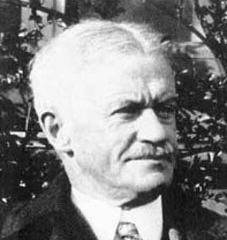
Albert J. Nock
Albert J. Nock

Albert J. Nock was an American author known for his contributions to political philosophy and economics. Born on October 13, 1870, in Scranton, Pennsylvania, he passed away on August 19, 1945. Nock's writing frequently criticized the welfare state and emphasized the importance of individual liberty and self-reliance. more

You May Also Like

“If you do not want the State to act like a criminal, you must disarm it as you would a criminal; you must keep it weak. The State will always be criminal in proportion to its strength; a weak State will always be as criminal as it can be, or dare be, but if it is kept down to the proper limit of weakness - which, by the way, is a vast deal lower limit than people are led to believe - its criminality may be safely got on with.”

“Instead of recognizing the State as ‘the common enemy of all well-disposed, industrious and decent men,’ the run of mankind, with rare exceptions, regards it not only as a final and indispensable entity, but also as, in the main, beneficent. The mass-man, ignorant of its history, regards its character and intentions as social rather than anti-social; and in that faith he is willing to put at its disposal an indefinite credit of knavery, mendacity and chicane, upon which its administrators may draw at will.”

“Another strange notion pervading whole peoples is that the State has money of its own; and nowhere is this absurdity more firmly fixed than in America. The State has no money. It produces nothing. It existence is purely parasitic, maintained by taxation; that is to say, by forced levies on the production of others. 'Government money,' of which one hears so much nowadays, does not exist; there is no such thing.”

“The State did not originate in any form of social agreement, or with any disinterested view of promoting order and justice. Far otherwise. The State originated in conquest and confiscation, as a device for maintaining the stratification of society permanently into two classes-an owning and exploiting class, relatively small, and a propertyless dependent class. . . . No State known to history originated in any other manner, or for any other purpose than to enable the continuous economic exploitation of one class by another.”

“The only beneficiaries of income taxation are the politicians, for it not only gives them the means by which they can increase their emoluments, but it also enables them to improve their importance. The have-nots who support the politicians in the demand for income taxation do so only because they hate the haves; . . . the sum of all the arguments for income taxation comes to political ambition and the sin of covetousness.”

“Income and inheritance taxes imply the denial of private property, and in that are different in principle from all other taxes. The government says to the citizen: “Your earnings are not exclusively your own; we have a claim on them, and our claim precedes yours; we will allow you to keep some of it, because we recognize your need, not your right; but whatever we grant you for yourself is for us to decide.”