“Every cradle asks us, Whence? and every coffin, Whither? The poor barbarian, weeping above his dead, can answer these questions as intelligently as the robed priest of the most authentic creed.”
Quote by Robert Green Ingersoll
Work
Popular edition of col. Ingersoll's lectures. (Freethought publ. co.'s ed.).
The lectures featured in this volume cover a range of topics, including religion, ethics, and the role of government. Colonel Ingersoll's persuasive and eloquent style is showcased throughout, making this a significant work in the history of American freethought. more
Author
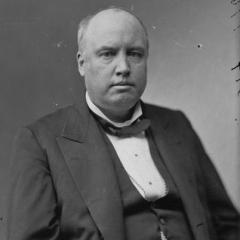
Robert Green Ingersoll
Robert Green Ingersoll was a prominent lawyer, orator, and freethinker. Born on August 11, 1833, and died on July 21, 1899, he was one of the most celebrated orators in 19th-century America. Known for his criticism of religion and government, Ingersoll was a leading advocate for individual freedom. more
You May Also Like
Source: Miscellany
Source: The Works of Robert G. Ingersoll: Discussions
“Let us agree not to step on each other’s feet.”
Source: The Works of Robert G. Ingersoll: Interviews
“In a world of cruelty, sympathy is a crime, and in a world of lies, truth is blasphemy.”
Source: Lectures of Col. R.G. Ingersoll: Including His Letters on the Chinese God--Is Suicide a Sin?--The Right to One's Life--etc. Etc. Etc
“Photography is the easiest thing to make, and one of the hardest things to make well.”