Quotessence
Home / Quotes / Quote by Erwin Schrodinger

Quote by Erwin Schrodinger

Work

What is Life?: With Mind and Matter and Autobiographical Sketches

This collection of works by Erwin Schrödinger delves into the profound questions of life, consciousness, and the relationship between mind and matter. It includes his seminal essay 'What is Life?' and further reflections on these themes, along with personal anecdotes and insights into his own life and scientific journey. more

Author
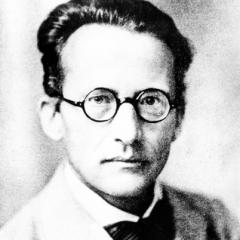
Erwin Schrodinger
Erwin Schrodinger

Austrian physicist and one of the key founders of quantum mechanics. His major contributions include the formulation of the Schrödinger equation, which had a profound impact on the development of quantum mechanics. more

You May Also Like

“Among the innumerable Footsteps of Divine Providence to be found in the Works of Nature, there is a very remarkable one to be observed in the exact Balance that is maintained, between the Numbers of Men and Women; for by this means it is provided, that the Species may never fail, nor perish, since every Male may have its Female, and of a proportionable Age.”

“Biologists have long attempted by chemical means to induce in higher organisms predictable and specific changes which thereafter could be transmitted in series as hereditary characters. Among microorganisms the most striking example of inheritable and specific alterations in cell structure and function that can be experimentally induced and are reproducible under well defined and adequately controlled conditions is the transformation of specific types of Pneumococcus.”

“In these strenuous times, we are likely to become morbid and look constantly on the dark side of life, and spend entirely too much time considering and brooding over what we can't do, rather than what we can do, and instead of growing morose and despondent over opportunities either real or imaginary that are shut from us, let us rejoice at the many unexplored fields in which there is unlimited fame and fortune to the successful explorer and upon which there is no color line; simply the survival of the fittest.”

“It is the very strangeness of nature that makes science engrossing. That ought to be at the center of science teaching. There are more than seven-times-seven types of ambiguity in science, awaiting analysis. The poetry of Wallace Stevens is crystal-clear alongside the genetic code.”