Quotessence
Home / Quotes / Quote by Thomas Hardy

Quote by Thomas Hardy

Work

Jude: The Shooting Script

Browse quotes and source details for this work. more

Author
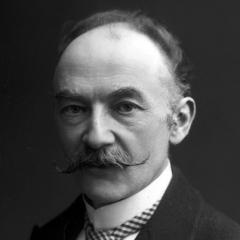
Thomas Hardy
Thomas Hardy

Thomas Hardy, a British novelist born on June 2, 1840, and died on January 11, 1928, is renowned for his novels that depict rural life, reflecting the social changes in 19th-century England. His works often carry a sense of pessimism, depicting the fates of characters with sympathy. more

You May Also Like

“While you may be able to keep your son Jimmy from owning [a gun], if you try to talk him out of wanting one, you are up against a pretty strong argument: You mean I shouldn't want a device that grants me power and identity, makes me feel dangerous and safe at the same time, instantly makes me the dominant male, and connects me to my evolutionary essence? Come on, Mom, get real!”

“It was Sunday, and Mumma had gone next door with Lena and the little ones. Under the pepper tree in the yard Pa was sorting, counting, the empty bottles he would sell back: the bottles going clink clink as Pa stuck them in the sack. The fowls were fluffing in the dust and sun: that crook-neck white pullet Mumma said she would hit on the head if only she had the courage to; but she hadn't.”

“Genuine people will not only celebrate you when you are on the mountaintop, but they will also encourage you when you are at rock bottom. They will provide support and motivation through it all.”

“In the parlor was a huge camera on wheels like the ones used in public parks, and the backdrop of a marine twilight, painted with homemade paints, and the walls papered with pictures of children at memorable moments: the first Communion, the bunny costume, the happy birthday. Year after year, during contemplative pauses on afternoons of chess, Dr. Urbino had seen the gradual covering over of the walls, and he had often thought with a shudder of sorrow that in the gallery of casual portraits lay the germ of the future of the city, governed and corrupted by those unknown children, where note even the ashes of his glory would remain.”

“Patrick hadn't been to a party since he was five years old, when the clamor of twenty over-sugared children in such disorganized proximity had led to a meltdown on a scale rarely witnessed during musical chairs. The very word 'party' had the power to trigger in him flashbacks of wailing classmates, overturned furniture, and a big brown dog gulping down spilled jelly.”