“Upon the decease [of] my wife, it is my Will and desire th[at] all the Slaves which I hold in [my] own right, shall receive their free[dom] . . . . The Negroes thus bound, are (by their Masters or Mistresses) to be taught to read and write; and to be brought up to some useful occupation, agreeably to the Laws of the Commonwealth of Virginia, providing for the support of Orphan and other poor Children. And I do hereby expressly forbid the Sale, or transportation out of the said Commonwealth, of any Slave I may die possessed of, under any pretence whatsoever.”
Quote by George Washington
Author
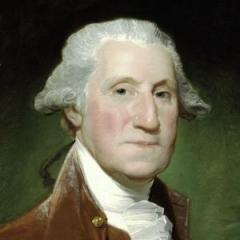
George Washington
George Washington was the first President of the United States and a key figure in the American Revolutionary War. Born on February 22, 1732, and died on December 14, 1799, Washington is known for his strong leadership and belief in democracy, playing a crucial role in American history. more
You May Also Like
Source: The Quotable George Washington: The Wisdom of an American Patriot
Source: Writings: Being His Correspondence, Addresses, Messages, and Other Papers, Official and Private, Selected and Published from the Original Manuscripts
Source: The real George Washington
Source: Affectionately Yours, George Washington: A Self-portrait in Letters of Friendship
Source: Selected Writings of James Madison
Source: Thomas Jefferson: A Chronology of His Thoughts
Source: The Constitution a pro-slavery compact, or, Extracts from the Madison papers, etc
Source: The Complete Papers And Writings Of Abraham Lincoln (Biographically Annotated Edition)