“A Law of Nature, (Lex Naturalis) is a Precept, or general Rule, found out by Reason, by which a man is forbidden to do, that, which is destructive of his life, or taketh away the means of preserving the same; and to omit, that, by which he thinketh it may be best preserved.”
Quote by Thomas Hobbes
Work
Leviathan, Parts I and II
A seminal work in political philosophy, examining the origins and justifications of political authority and the relationship between the ruler and the ruled. more
Author
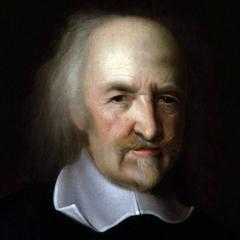
Thomas Hobbes
Thomas Hobbes, a British philosopher, politician, historian, economist, and writer, was born on April 5, 1588, in Wiltshire, and died on December 4, 1679, in Oxford, England. Hobbes is considered one of the most important philosophers of the 17th century, known for his profound analysis of the state, society, and human behavior. more
You May Also Like
Source: Man and Citizen: De Homine and De Cive
Source: Behemoth or The Long Parliament
Source: The Essential Leviathan: A Modernized Edition
Source: Of Liberty and Necessity; a treatise, wherein all controversy concerning predestination, election, free will, grace, merits, reprobation, etc. is fully decided and cleared. New edition
Source: The Ethics of Hobbes: As Contained in Selections from His Works
Source: Leviathan, Parts I and II - Revised Edition
Source: A Miscellany, Containing Several Tracts on Various Subjects
Source: Works: Account of His Life and Letters
Source: The Works of George Berkeley, D.D., Formerly Bishop of Cloyne: Philosophical works, 1732-33: Alciphron. The theory of vision