Quotessence
Home / Quotes / Quote by Frank Knight

Quote by Frank Knight

Work

The Ethics of Competition

This book delves into the ethical dimensions of competition, examining its role in society, business, and personal life. It investigates the moral dilemmas that arise from competitive interactions and offers insights into the principles that govern fair and ethical competition. more

Author
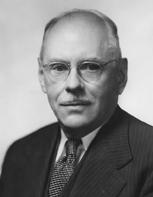
Frank Knight
Frank Knight

Frank Knight was an American economist born on November 7, 1885, and died on April 15, 1972. He is renowned for his contributions to the theory of risk and uncertainty in economics. more

You May Also Like

“Generous unemployment benefits can increase both structural and frictional unemployment. So government policies intended to help workers can have the undesirable side effect of raising the natural rate of unemployment.”

“Raising the minimum wage and lowering the barriers to union organization would carry a trade-off - higher unemployment. A better idea is to have the government subsidize low-wage employment. The earned-income tax credit for low-income workers - which has been the object of proposed cuts by both President Clinton and congressional Republicans - has been a positive step in this direction.”

“I've always believed that a speculative bubble need not lead to a recession, as long as interest rates are cut quickly enough to stimulate alternative investments. But I had to face the fact that speculative bubbles usually are followed by recessions. My excuse has been that this was because the policy makers moved too slowly - that central banks were typically too slow to cut interest rates in the face of a burst bubble, giving the downturn time to build up a lot of momentum.”

“Governments do not necessarily act in the national interest, especially when making detailed microeconomic interventions. Instead, they are influenced by interest group pressures. The kinds of interventions that new trade theory suggests can raise national income will typically raise the welfare of small, fortunate groups by large amounts, while imposing costs on larger, more diffuse groups.”

“It should be possible to emphasize to students that the level of employment is a macroeconomic issue, depending in the short run on aggregate demand and depending in the long run on the natural rate of unemployment, with microeconomic policies like tariffs having little net effect. Trade policy should be debated in terms of its impact on efficiency, not in terms of phoney numbers about jobs created or lost.”