“Perhaps the early grave Which men weep over may be meant to save.”
Book:DON JUAN
“Perhaps the early grave Which men weep over may be meant to save.”
Lord Byron's Don Juan is a sprawling epic poem written in ottava rima, composed over several years until the author's death. Unlike traditional portrayals of Don Juan as a predatory seducer, Byron's protagonist is depicted as a handsome but largely unwitting figure who is seduced by others and drifts through a variety of amorous and picaresque encounters. The poem blends comedy, romance, and sharp social satire, targeting hypocrisy in politics, religion, and society. It ranges across settings from Spain to Greece, Turkey, Russia, and England, offering a panoramic view of early 19th-century European mores. The work is noted for its digressive style, witty narrator, and irreverent tone, and it remains one of the most celebrated examples of Romantic satire. more
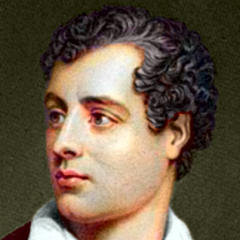
Lord Byron, born on January 22, 1788, and died on April 19, 1824, was a prominent English Romantic poet. His poetry is characterized by its strong personality and passion, and has had a profound impact on literature. more
“For a man to become a poet (witness Petrarch and Dante), he must be in love, or miserable.”
“Beneficence is always free, it cannot be extorted by force.”