“There is no logic that can be superimposed on the city; people make it, and it is to them, not buildings, that we must fit our plans.”
Quote by Jane Jacobs
Work
Vital Little Plans: The Short Works of Jane Jacobs
This volume gathers a selection of shorter pieces by Jane Jacobs, spanning her career from the 1930s to the early 2000s. It includes previously uncollected articles, lectures, and correspondence that complement her major works like The Death and Life of Great American Cities. The pieces explore themes such as urban planning, grassroots activism, the ethics of development, and the intricate social and economic dynamics of neighborhoods. The collection offers insight into Jacobs's evolving thinking and her advocacy for organic, people-centered urban environments. more
Author
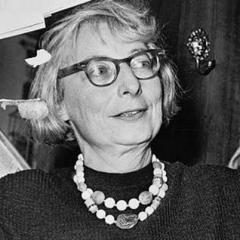
Jane Jacobs
Jane Jacobs, an American journalist and urban theorist, was born on May 4, 1916, and passed away on April 25, 2006. She is renowned for her profound insights into urban life and her unique perspectives on urban planning. Her book, 'The Death and Life of Great American Cities,' had a revolutionary impact on modern urban planning. more
You May Also Like
Source: The Death and Life of Great American Cities
“Traffic congestion is caused by vehicles, not by people in themselves.”
Source: The Death and Life of Great American Cities
Source: The Death and Life of Great American Cities
Source: The Death and Life of Great American Cities
Source: Vital Little Plans: The Short Works of Jane Jacobs
“In our American cities, we need all kinds of diversity.”
Source: The Death and Life of Great American Cities
Source: The Death and Life of Great American Cities
Source: The Death and Life of Great American Cities
“New ideas must use old buildings”
Source: The Death and Life of Great American Cities