Quotessence
Home / Quotes / Quote by Wright Patman

Quote by Wright Patman

“The Open Market Committee, as presently established, is plainly not in the public interest. This committee must be operated by purely public servants, representatives of the people as a whole and not any single interest group. The Open Market Committee should be abolished, and its powers transferred to the Federal Reserve Board - the present public members of the committee, with reasonably short terms of office.”

Quote by Wright Patman

Author
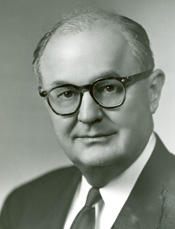
Wright Patman
Wright Patman

Wright Patman was a distinguished U.S. congressman from Texas, serving in the House of Representatives from 1925 until his death in 1976. He was a prominent figure during the New Deal era and a fierce critic of corporate power and economic inequality. Patman's career was marked by his advocacy for economic regulation and consumer protection, as well as his opposition to the Vietnam War. more

You May Also Like

“It may seem strange, but Congress has never developed a set of goals for guiding Federal Reserve policy. In founding the System, Congress spoke about the country's need for "an elastic currency." Since then, Congress has passed the Full Employment Act, declaring its general intention to promote "maximum employment, production, and purchasing power." But it has never directly counseled the Federal Reserve.”

“There have been times when the Federal Reserve has restricted the money supply and raised interest rates to gain an end, which had much better been left to another Government agency or the Congress to attain. The country could have had lower interest rates without sacrificing anything else.”

“There are many reasons why the general public doesn't really understand our monetary system. In the first place, money is something that people tend to get emotional about. After all, money involves, and always has involved, something closely akin to faith-which probably explains why in many past societies the money system has been in the hands of a priesthood, the subject of magical rites, and the ceremonial services of the tribe's medicine man.”

“In a democracy the responsibility for the Government's economic policies, which so affect the economy, normally rests with the elected representative of the people: in our case, with the President and the Congress. If these two follow economic policies inimical to the general welfare, they are accountable to the people for their actions on election day. With Federal Reserve independence, however, a body of men exist who control one of the most powerful levers moving the economy and who are responsible to no one.”

“If the Federal Reserve pursues a policy which Congress or the President believes not to be in the public interest, there is nothing Congress can do to reverse the policy. Nor is there anything the people can do. Such bastions of unaccountable power are undemocratic. The Federal Reserve System must be reformed, so that it is answerable to the elected representatives of the people.”

“The Federal Reserve is the overlord of the money supply. If these two are not steering in the same direction, they can either neutralize each other or have the economy lurching in all directions. This is not a rational system for setting economic policy. It has given us trouble in the past, as the text will establish, and will inevitably in the future.”

“If the world is made to furnish each individual with the means of livelihood and the instruments for his growth and progress, each man has therefore the right to find in the world what is necessary for himself. The recent Council reminded us of this: "God intended the earth and all that it contains for the use of every human being and people. Thus, as all men follow justice and unite in charity, created goods should abound for them on a reasonable basis."”

“Individual initiative alone and the mere free play of competition could never assure successful development. One must avoid the risk of increasing still more the wealth of the rich and the dominion of the strong, whilst leaving the poor in their misery and adding to the servitude of the oppressed.”