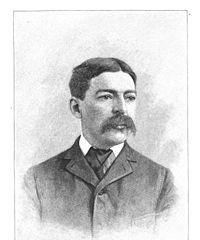
“Art has a double visage: it looks before and after. Romance is its forward-looking face. The germ of growth is in romanticism. Formalism, on the other hand, consolidates tradition; gleans what has been gained and makes it facile to the hand or the mind; economizes the energy of genius.”
Quote by George Edward Woodberry
“Art is expression; what is expressed is often the vision of a subtle and powerful soul, and also his experience with his vision; and however vivid and skilful he may be in the means of expression, yet it is frequently found that the master-spell in his work is something felt to be indefinable and inexpressible.”
Source: Two Phases of Criticism, Historical and Aesthetic: Lectures Delivered on the Larwill Foundation of Kenyon College, May Seventh and Eighth, 1913
“Genius is that in which the soul of a race bums at its brightest, revealing and preserving its vision; works of art are great and significant in proportion to the clarity and fulness with which they incarnate this vision.”
“If the aristocracy of the whole white race is so to melt in a world of the colored races of the Earth, I for one should only rejoice in such a divine triumph of the sacrificial idea in history; for it would mean the humanization of mankind.”
Source: The Torch, and Other Lectures and Addresses
“Much of a poet's experience takes place in imagination only; the life he tells is oftenest the life that he strongly desires to live, and the power, the purity and height of his utterance may not seldom be the greater because experience here uses the voices of desire.”
Source: Collected Essays: The torch and other lectures and addresses
“Our understanding of Shakespeare already depends largely on the vitality of Renaissance elements in our education. Each man must live in his own generation, as the saying is; but the generations are bound together by the golden links of the great tradition of civilization.”
Source: Collected Essays: The torch and other lectures and addresses
“Seasonal changes, as it were, take place in history, when there is practically an almost universal death, a falling of the foliage of the tree of life. Such were the intervals between the ancient and mediaeval time, the mediaeval and the modern.”
Source: Shakespeare: An Address
“Shakespeare is, essentially, the emanation of the Renaissance. The overflow of his fame on the Continent in later years was but the sequel of the flood of the Renaissance in Western Europe. He was the child of that great movement, and marks its height as it penetrated the North with civilization.”
Source: Collected Essays: The torch and other lectures and addresses
“The critic is genius at one remove; he is not unlike an actor on the stage, and incarnates in his mind, as the actor embodies in his person, another's work; only thus does he understand art, realize it, know it; and having arrived at this, his task is done.”
Source: Two Phases of Criticism, Historical and Aesthetic: Lectures Delivered on the Larwill Foundation of Kenyon College, May Seventh and Eighth, 1913
“The Greeks, those originators of the intellectual life, fixed for us the idea of the poet. He was a divine man; more sacred than the priest, who was at best an intermediary between men and the gods, but in the poet the god was present and spoke.”
Source: The Torch, and Other Lectures and Addresses
“The growth of art seems to be in cycles, and often its vigorous lifetime is restricted to a century or two. The periods of distinctive drama, Greek, English, Spanish, fall within such a limit; the schools of painting and sculpture likewise; and, in poetry, the Victorian age or the school of Pope will serve as examples.”
Source: Two Phases of Criticism, Historical and Aesthetic: Lectures Delivered on the Larwill Foundation of Kenyon College, May Seventh and Eighth, 1913