Quotessence
Home / Quotes / Quote by Abraham Kuyper

Quote by Abraham Kuyper

“Indeed, man is incapable of doing any good. Are all unbelievers then wicked and repulsive men? Not at all. In our experience we find that the unbelieving world excels in many things. Precious treasures have come down to us from the old heathen civilization. In Plato you find pages that you devour. Cicero fascinates you and bears you along by his noble tone and stirs in you holy sentiments…It is not exclusively the spark of genius or the splendor of talent, which excites your pleasure in the words and actions of unbelievers, but it is often their beauty of character, their zeal, their devotion, their love, their candor, their faithfulness, and their sense of honesty. Who of us has not been put to the blush by the virtues of the heathen? It is thus a fact, that your dogma of total depravity by sin does not always tally with your experience in life. Well, my friends, by its doctrine of common grace Calvinism can hold on to both what the Bible teaches on human depravity and to what experience teaches about the virtues of the heathen.”

Quote by Abraham Kuyper

Author
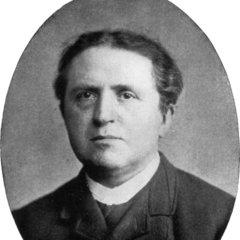
Abraham Kuyper
Abraham Kuyper

Dutch politician, theologian, and educator. Abraham Kuyper was born on October 29, 1837, and died on November 8, 1920. He had a significant impact in the fields of Dutch politics, religion, and education, being one of the founders of Dutch Christian democracy. more

You May Also Like

“This was the fatal flaw in Tim Leary's trip. He crashed around America selling "conciousness expansion" without ever giving a thought to the grim meat-hook realities that were lying in wait for all the people who took him too seriously. After West Point and the Priesthood, LSD must have seemed entirely logical to him... but there is not much satisfaction in knowing that he blew it very badly for himself, because he took too many others down with him.”

“There is nothing passive about mindfulness. One might even say that it expresses a specific kind of passion—a passion for discerning what is subjectively real in every moment. It is a mode of cognition that is, above all, undistracted, accepting, and (ultimately) nonconceptual. Being mindful is not a matter of thinking more clearly about experience; it is the act of experiencing more clearly, including the arising of thoughts themselves. Mindfulness is a vivid awareness of whatever is appearing in one’s mind or body—thoughts, sensations, moods—without grasping at the pleasant or recoiling from the unpleasant.”

“When love has left us in the lurch and nothing ever strikes a chord anymore, we may come to realize a vacuum of the lost vibrations of happiness and an absence of the ethereal and exalting feel of harmony that we only become aware of, after time passes by and everything has expired. (“Amour en friche”)”

“To describe heaven it is not necessary to transport the materials of earth there. One must leave earth & its materials where they are, so as to beautify life with its ideal. To address Elohim familiarly is an unseemly buffoonery. The best way of showing him gratitude is not by yelling in his ears that he is mighty, that he created the world, that we are wormlets compared to his greatness. He knows it better than we. Men may excuse themselves of informing him of that. The best way of showing him gratitude is to console humanity, to restore all to it, take it by the hand & treat it like a brother. This is more genuine.”

“Today I've prepared a dish I'm calling 'Sea Bass of Three.' The first is a citrus ceviche with yellow chilies and a hint of preserved lemon, to be eaten with plantain crisps on the left of your plate." Even from her vantage, Penelope could see Elijah had molded the ceviche into a vague fish shape that pointed to the center of the plate. "Next, in the center, is a pan-sautéed fillet of sea bass coated in chili de árbol, and paprika potatoes sliced and arranged to resemble fish scales," Elijah continued. Penelope's mouth watered at the sight of the fillet, which looked perfectly crisp and very much resembled a small fish. It again seemed to point to the third and final part of the dish, thanks to the way he'd arranged it all. "And for the final phase, you have a sea-bass-and-cod fritter with fresh coriander leaves, serrano chilies, and a pineapple, chili, and lime foam." The queen and the princess nodded and started to eat the ceviche. "Will you explain what you've done with the samphire?" Lady Rutland asked, pointing to the green seaweed that resembled very thin asparagus spears. "The samphire is meant to symbolize the sea, just as the pineapple foam is meant to suggest sea foam. I sautéed the samphire in a spiced butter," Elijah replied. Penelope grinned from her seat behind the Minstrels' Gallery's open door. He'd almost made it look like the fish (especially the potato-scaled fillet in the center) was still swimming in the sea. From what she could see, he'd dotted the foam in strategic places on the plate, including near the ceviche, so one could take a bite with a plantain crisp and the foam, or try it plain.”

“We'll start with Un Petite Flamme. It's our espresso macaron. Go on, try it." She looks down at her plate. "This one? With the gold?" "Yup, go on." She puts it against her tongue like she's taking communion. "Good?" She nods quickly. Then I place a purple one on her plate. Rilla lifts it up. "This one has the jam inside, right?" "Yes; it's Remede de Deliverance. Black currant filling, in the middle of the cream." She closes her eyes while she eats it slowly. So slowly I worry she will need to come up for air. "What does that mean?" she asks when she has finally swallowed the last tiny mouthful. "Remede de Deliverance? 'Rescue remedy.' It's violet-flavored.”