“How much reverence has a noble man for his enemies!--and such reverence is a bridge to love.--For he desires his enemy for himself, as his mark of distinction; he can endure no other enemy than one in whom there is nothing to despise and very much to honor! In contrast to this, picture "the enemy" as the man of ressentiment conceives him--and here precisely is his deed, his creation: he has conceived "the evil enemy," "the Evil One," and this in fact is his basic concept, from which he then evolves, as an afterthought and pendant, a "good one"--himself!”
Quote by Friedrich Nietzsche
Work
Basic Writings of Nietzsche
Comprising key essays and speeches, this volume offers a comprehensive exploration of Nietzsche's complex thought, including his critiques of conventional morality and his advocacy for the concept of the 'overman'. more
Author
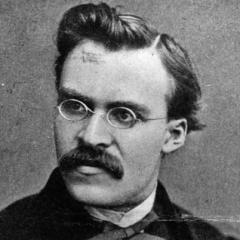
Friedrich Nietzsche
Friedrich Nietzsche was a German philosopher, cultural critic, poet, and writer whose works have had a profound impact on subsequent philosophy, literature, and thought. His ideas revolve around concepts such as the 'will to power', the 'Übermensch', and the 'eternal recurrence'. more
You May Also Like
“A little health now and again is the ailing person's best remedy.”
Source: The Portable Nietzsche
“Truly, whoever possesses little is that much less possessed: praised be a little poverty!”
“Ah, only he who knows where he sails, knows what wind is good, and a fair wind for him.”
“It is the good war that hallows every cause.”
Source: Thus Spoke Zarathustra: A Book for Everyone and Nobody