Quotessence
Home / Quotes / Quote by Charles Caleb Colton

Quote by Charles Caleb Colton

“To admit that there is any such thing as chance, in the common acceptation of the term, would be to attempt to establish a power independent of God.”

Quote by Charles Caleb Colton

Author
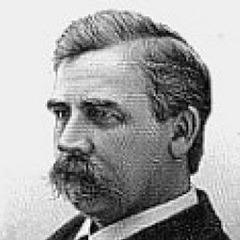
Charles Caleb Colton

Charles Caleb Colton was an English writer active from 1780 to 1832. Known for his humor and wit, he is particularly recognized for his aphorisms and satirical works. more

You May Also Like

“All who have been great and good without Christianity would have been much greater and better with it. If there be, amongst the sons of men, a single exception to this maxim, the divine Socrates may be allowed to put in the strongest claim. It was his high ambition to deserve, by deeds, not by creeds, an unrevealed heaven, and by works, not by faith, to enter an unpromised land.”

“A semi-civilized state of society, equally removed from the extremes of barbarity and of refinement, seems to be that particular meridian under which all the reciprocities and gratuities of hospitality do most readily flourish and abound. For it so happens that the ease, the luxury, and the abundance of the highest state of civilization, are as productive of selfishness, as the difficulties, the privations, and the sterilities of he lowest.”

“Be very slow to believe that you are wiser than all others; it is a fatal but common error. Where one has been saved by a true estimation of another's weakness, thousands have been destroyed by a false appreciation of their own strength.”

“When young, we trust ourselves too much, and we trust others too little when old. Rashness is the error of youth, timid caution of age. Manhood is the isthmus between the two extremes; the ripe and fertile season of action, when alone we can hope to find the head to contrive, united with the hand to execute.”

“To be satisfied with the acquittal of the world, though accompanied with the secret condemnation of conscience, this is the mark of a little mind; but it requires a soul of no common stamp to be satisfied with its own acquittal, and to despise the condemnation of the world.”