“Man is very much a creature of habit. A thing that rarely strikes his senses will generally have but little influence upon his mind. A government continually at a distance and out of sight, can hardly be expected to interest the sensations of the people. The inference is, that the authority of the Union, and the affections of the citizens towards it, will be strengthened rather than weakened by its extension to what are called matters of internal concern.”
Quote by Alexander Hamilton
Work
America's Founding Documents: The Declaration of Independence, the Articles of Confederation, the United States Constitution, the Federalist Papers, and the Bill of Rights
America's Founding Documents presents a comprehensive collection of the foundational texts of the United States. It includes the Declaration of Independence, which announced the separation of the thirteen American colonies from Great Britain; the Articles of Confederation, the first constitution of the United States; the Constitution, which established the structure of the federal government; the Federalist Papers, a series of essays advocating for the ratification of the Constitution; and the Bill of Rights, the first ten amendments to the Constitution that guarantee fundamental rights and protections. more
Author
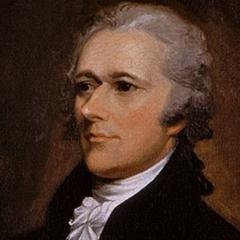
Alexander Hamilton
Alexander Hamilton was a Founding Father of the United States, born on January 11, 1757, and died on July 12, 1804. He played a crucial role in the American Revolutionary War and was instrumental in the drafting of the U.S. Constitution. As the first Secretary of the Treasury, Hamilton promoted fiscal stability and economic growth, establishing the First Bank of the United States and proposing solutions for federal debt. His ideas and policies had a profound impact on the early political and economic development of the United States. more
You May Also Like
“The obscurity is much oftener in the passions and prejudices of the reasoner than in the subject.”
“Common interest may always be reckoned upon as the surest bond of sympathy.”
Source: The Federalist on the New Constitution, Written in the Year 1788, with an Appendix Containing the Letters of Pacificus and Helvidius on the Proclamation of Neutrality of 1793
Source: The federalist papers
Source: The Essential Federalist: A New Reading of the Federalist Papers
Source: The Origin of the Nation: Declaration of Independence, Constitution, Bill of Rights and Other Amendments, Federalist Papers & Common Sense: Creating America - Landmark Documents that Shaped a New Nation
Source: The Federalist on the New Constitution
Source: The Federalist, on the New Constitution, Written in the Year 1788
Source: The Essential Federalist: A New Reading of the Federalist Papers
“There is a contagion in example which few men have sufficient force of mind to resist.”
Source: The Essential Federalist: A New Reading of the Federalist Papers