Quotessence
Home / Quotes / Quote by Wolfgang Pauli

Quote by Wolfgang Pauli

“Later, however, I came to recognize the objective nature of these dreams or fantasies ... Thus it was that I gradually came to acknowledge that such fantasies or dreams are neither meaningless nor purely arbitrary but rather convey a sort of "second meaning" of the terms applied.”

Quote by Wolfgang Pauli

Author
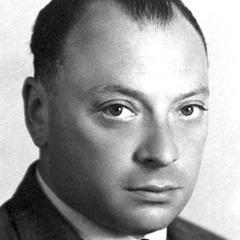
Wolfgang Pauli
Wolfgang Pauli

Wolfgang Pauli was a distinguished physicist born on April 25, 1900, and died on December 15, 1958. He is recognized for his substantial contributions to quantum mechanics, especially for the formulation of the Pauli exclusion principle. Pauli was awarded the Nobel Prize in Physics in 1945 for his work on the explanation of the fine structure of atomic spectra. more

You May Also Like

“It seems significant that according to quantum physics the indestructibility of energy on one hand which expresses its timeless existence and the appearance of energy in space and time on the other hand correspond to two contradictory (complementary) aspects of reality. In fact, both are always present, but in individual cases the one or the other may be more pronounced.”

“Although I have no objection to accepting the existence of relatively constant psychic contents that survive personal ego, it must always be born in mind that we have no way of knowing what these contents are actually like "as such." All we can observe is their effect on other living people, whose spiritual level and whose personal unconscious crucially influence the way these contents actually manifest themselves.”

“Modern man, seeking a middle position in the evaluation of sense impression and thought, can, following Plato , interpret the process of understanding nature as a correspondence, that is, a coming into congruence of pre-existing images of the human psyche with external objects and their behaviour. Modern man, of course, unlike Plato , looks on the pre-existent original images also as not invariable, but as relative to the development of a conscious point of view, so that the word "dialectic" which Plato is fond of using may be applied to the process of development of human knowledge.”